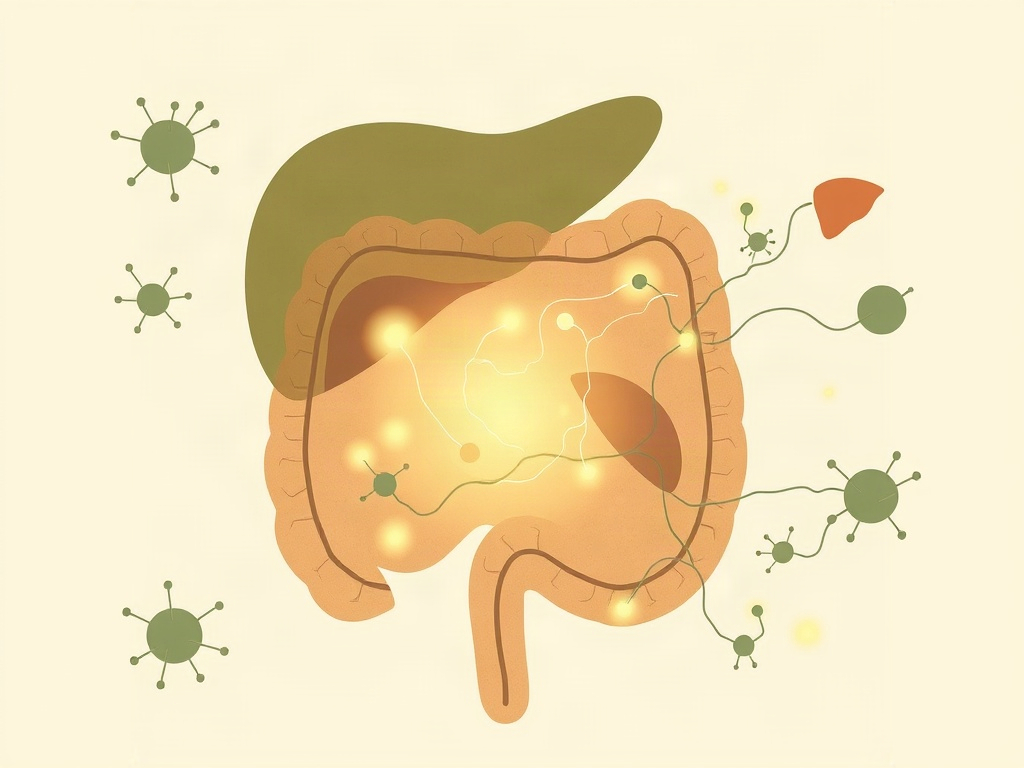
Chronic low-grade inflammation — now widely recognized as a central driver of aging — has long resisted targeted intervention because its origins are diffuse. New evidence points to a specific gut microbial axis that may govern this process, potentially reframing how we approach biological aging at the microbiome level.
Published in Nature Aging, this study combined enterotype profiling across multiple Chinese cohorts with the construction of a novel biological aging clock called MicroAge, which tracks microbial community composition over time. Using this framework, the researchers identified Bifidobacterium pseudocatenulatum as a species consistently depleted with age in both sexes. Oral supplementation with this single bacterium in naturally aged mice restored intestinal barrier integrity, reduced systemic inflammaging across multiple organs — including the brain and liver — and measurably improved both cognitive function and motor performance. The team then isolated 5-aminovaleric acid betaine (5-AVAB) as a key metabolite produced by this bacterium, confirmed that human 5-AVAB levels decline physiologically during aging, and demonstrated that 5-AVAB supplementation alone partially reproduced the multi-organ benefits observed with live bacterial administration.
What makes this work notable is its mechanistic specificity. Most probiotic research suffers from vague endpoints and underpowered designs; this study moves from population-level microbiome data, through an aging clock, to a discrete metabolite with measurable downstream effects — a rare chain of translational evidence. The identification of 5-AVAB as a bottleneck metabolite is particularly significant because it suggests a small-molecule therapeutic path that bypasses the colonization variability inherent to probiotic delivery. Limitations remain: the cohorts are exclusively Chinese, the functional outcomes are primarily rodent-derived, and the inflammaging suppression mechanisms downstream of 5-AVAB are not yet fully resolved. Independent replication in diverse human populations and randomized trials will be essential before clinical translation. Still, for researchers tracking the microbiome-longevity intersection, the B. pseudocatenulatum–5-AVAB axis represents a meaningfully specific hypothesis worth following.