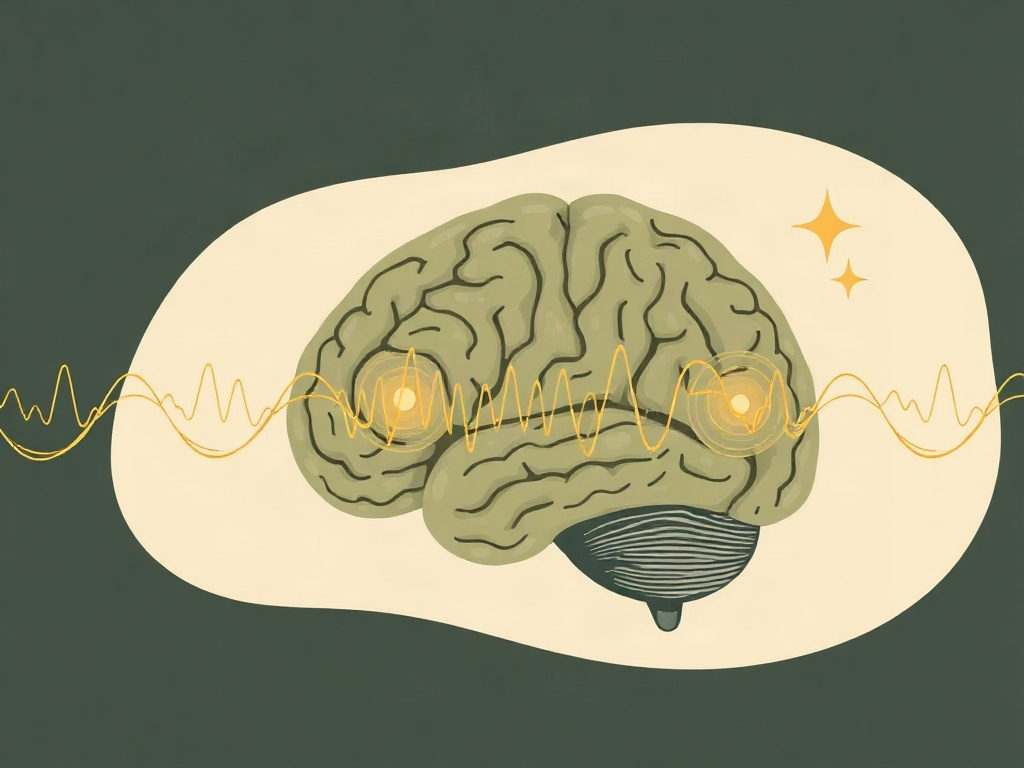
Sleep quality is rarely gender-neutral, yet the neurological basis of that disparity has remained stubbornly opaque. A comprehensive meta-analysis now offers the clearest quantitative picture to date of how the sleeping female brain differs at the oscillatory level from its male counterpart — and why those differences may partly explain the well-documented female excess in insomnia prevalence.
Drawing on systematic searches across four major databases, researchers identified 43 eligible studies, with 13 reporting sufficiently granular data on healthy sleepers (668 participants) to permit random-effects meta-analyses. The key finding: compared with male sleepers, females exhibited significantly higher sleep spindle density alongside elevated sigma and delta power. Sleep spindles — fast oscillatory bursts generated by thalamocortical circuits during NREM stage 2 — are intimately linked to memory consolidation, sleep protection against sensory disruption, and overall sleep depth. Delta power reflects the intensity of slow wave sleep, the brain's most physically restorative phase. Higher values in both domains suggest females, under normal conditions, generate more robust sleep microarchitecture than males.
This finding carries meaningful implications for the insomnia paradox — the observation that women report worse sleep quality and carry a roughly 1.4-fold greater insomnia risk than men, even though objective polysomnography often shows comparable or even superior sleep architecture in females. The present analysis adds important neurophysiological texture to that paradox: if healthy women begin with stronger baseline spindle and slow wave activity, disruptions to those systems in insomnia may register more acutely, or the threshold for subjective sleep dissatisfaction may sit at a different neurological set point. A critical limitation tempers enthusiasm, however: pooling data for insomnia cohorts proved impossible due to inconsistent statistical reporting across studies — a methodological gap that blunts the clinical utility of this otherwise well-constructed review. The sample of healthy sleepers was also modest at 668 individuals. This work is best characterized as a rigorous, paradigm-clarifying baseline, pointing toward urgently needed sex-stratified insomnia neurophysiology research.