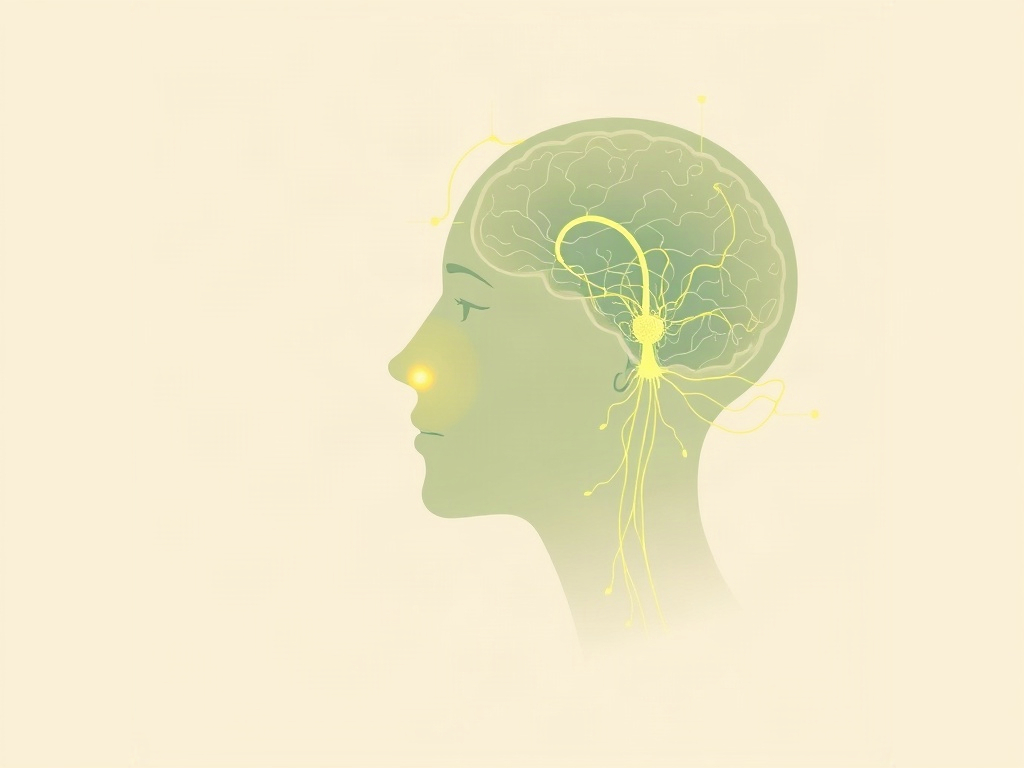
Breathing exercises have long been prescribed for anxiety, yet the precise neural machinery converting nostril airflow into emotional calm has remained elusive — until now. This finding from PNAS matters because it shifts breathing-based interventions from folk wisdom into hard mechanistic neuroscience, potentially pointing toward non-pharmacological targets for the world's most common mental health condition.
The research identifies a causal, bidirectional relationship between nasal afferent frequency — the rate at which airflow-sensing neurons in the nasal cavity fire — and anxiety state in mice. Crucially, the effect is attributed to frequency alone, independent of other respiratory variables, and operates through a discrete nose-to-brain neural circuit. By manipulating nasal sensory input at specific frequencies, the investigators were able to both elevate and suppress anxiety-like behavior, demonstrating genuine bidirectionality rather than a one-way calming effect. The circuit architecture links olfactory or trigeminal nasal afferents to brain regions implicated in fear and arousal processing, offering a concrete anatomical substrate for the observed behavioral changes.
Placing this in broader context, it joins a growing body of work connecting respiratory rhythm to limbic and prefrontal brain dynamics — including human electrophysiology studies showing that inhalation phase modulates amygdala excitability. What distinguishes this study is the causal language: by directly controlling nasal afferent firing rate rather than simply observing correlations, the team moves beyond association. That said, important caveats apply. The work is conducted entirely in mice, and rodent anxiety models — open-field tests, elevated-plus maze — are imperfect proxies for human anxiety disorders. The specific circuit nodes identified may not map cleanly onto human neuroanatomy. Nevertheless, if the frequency-tuning principle translates, it could inform precision breathing protocols or even neuromodulation devices targeting nasal sensory pathways. For a field still heavily reliant on SSRIs, a validated peripheral circuit entry-point for anxiety regulation would be genuinely paradigm-shifting. This study is incremental but mechanistically significant.