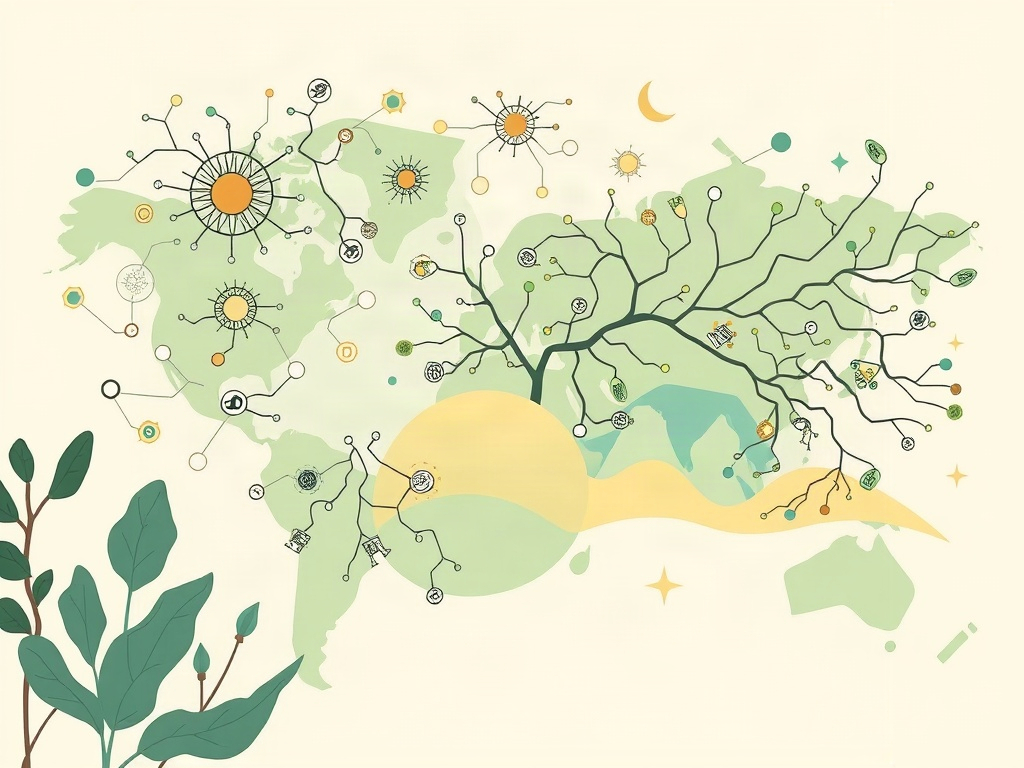
The way clinicians define and diagnose mental illness may rest on a fundamentally flawed premise — that psychiatric conditions are discrete, natural categories waiting to be discovered. A new theoretical framework published in JAMA Psychiatry challenges this assumption directly, with implications for how the field designs research, trains clinicians, and ultimately treats patients.
Drawing from evolutionary biology's decades-long struggle to classify species, the authors propose applying the concept of homeostatic property clusters (HPCs) to psychiatric nosology. Under this model, mental disorders are not fixed natural kinds but probabilistic aggregations of biopsychosocial properties — symptoms, cognitive patterns, neurobiological markers, and social factors — that tend to co-occur because each reinforces the presence of others. Just as biological species have fuzzy boundaries, overlap zones, and transitional forms, so too do mental health conditions. The review argues that diagnostic structures like those in the DSM are not discovered in nature but are superimposed on a continuous, messy landscape — a "mental health atlas" of property associations and their dynamics.
This theoretical repositioning carries real weight. The DSM has undergone multiple major revisions since 1980, yet fundamental problems persist: high comorbidity rates, poor interrater reliability, and weak predictive validity for treatment outcomes. The HPC framework doesn't claim to solve these issues overnight, but it offers a philosophically coherent alternative to categorical thinking. Importantly, this is a narrative review — not an empirical study — so its value lies in conceptual reframing rather than new data. Whether the proposed research agenda for mapping mental health property clusters can be operationalized into measurable, clinically useful tools remains to be demonstrated. Still, at a moment when psychiatric classification is under sustained scrutiny from both researchers and the RDoC initiative, this framework represents a potentially paradigm-shifting contribution to the foundational theory underlying mental health science.