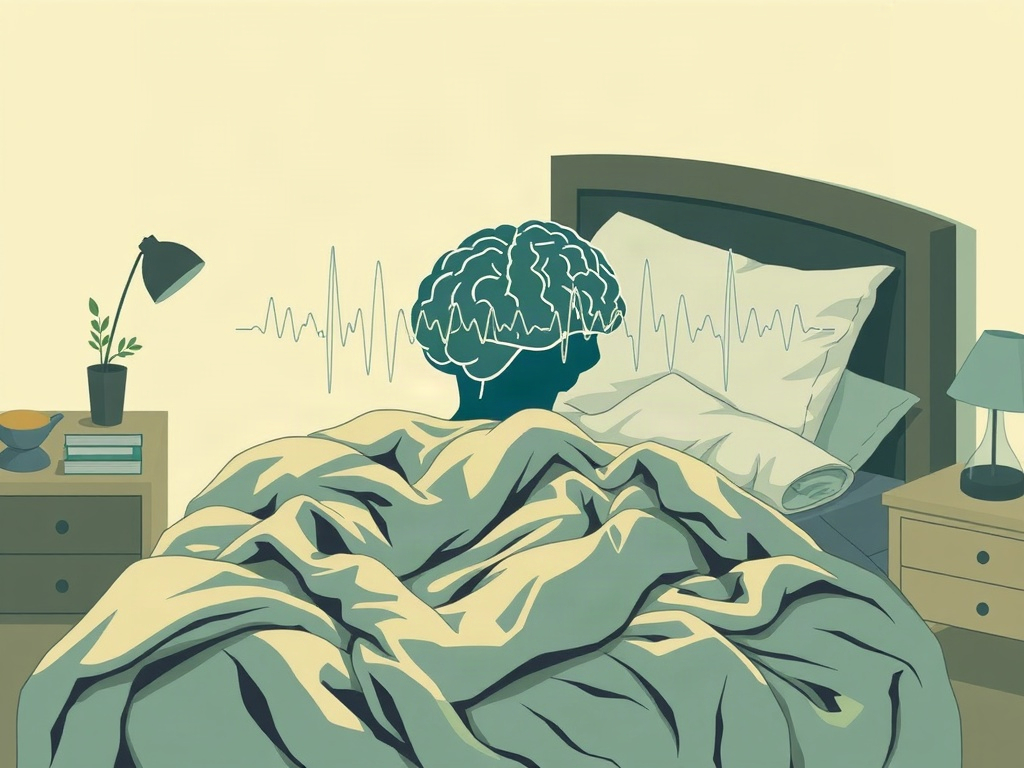
Sleep apnea affects an estimated one billion people globally, yet its root causes have remained frustratingly opaque — standard explanations center on anatomy and obesity while largely ignoring the nervous system's upstream role. This PNAS study reframes the disorder as, at least partly, a stress-mediated neurological condition, with direct implications for how clinicians screen and treat it.
Using a cross-species design, researchers exposed rats to chronic psychosocial stress protocols and documented the emergence of sleep-disordered breathing patterns that mirrored obstructive and central apnea signatures seen in humans. Critically, the team identified neurological pathways — likely involving autonomic dysregulation and altered respiratory motor control — through which sustained psychosocial stress precipitates apnea events. Parallel observational data from human cohorts supported the translational link, showing that stress burden was associated with apnea onset independent of conventional risk factors such as body mass index and craniofacial anatomy. The anxiety–apnea risk doubling noted in prior epidemiological work appears to have found a plausible mechanistic explanation here.
This finding sits at the intersection of two underappreciated research threads: the autonomic nervous system's role in upper airway tone, and the well-documented but poorly acted-upon relationship between psychological stress and respiratory physiology. Earlier work established that sympathetic overactivation can reduce hypoglossal nerve output to upper airway dilator muscles, making collapse more likely during sleep — a mechanism consistent with what chronic stress would predictably produce. What makes this study incrementally significant rather than paradigm-shifting is the reliance on animal models for the mechanistic layer, with the human data remaining observational. Causality in the human arm cannot be confirmed. Still, the dual-species design strengthens biological plausibility considerably. For the field, this suggests that stress-reduction interventions — cognitive behavioral therapy, autonomic retraining — deserve formal evaluation as adjunct or even primary sleep apnea treatments, a hypothesis currently underexplored in randomized trials.