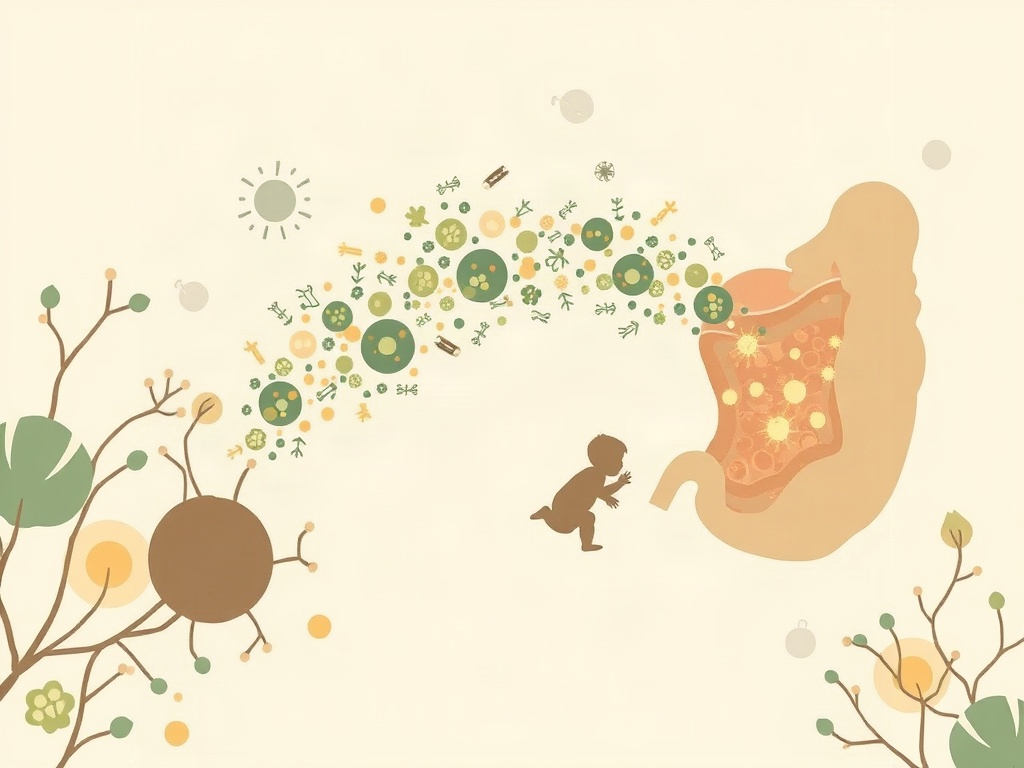
The microbial blueprint a child carries through life may be written earlier — and by a more specific author — than previously appreciated. Emerging evidence has long suggested that birth and breastfeeding seed an infant's gut, but precisely where those founding bacterial strains originate has remained murky. A large-scale mother-infant study published in Nature Medicine now offers a cleaner picture, with meaningful implications for early-life health interventions.
Analyzing a substantial cohort of mother-infant pairs, researchers found that the maternal gut microbiome functions as the dominant reservoir from which infants acquire their early gut bacterial strains — not merely microbial species in general, but specific strain-level lineages traceable back to the mother's intestinal ecosystem. Critically, the composition of this maternally transmitted microbiome was associated with measurable early health outcomes, with eczema emerging as a notable condition linked to variation in these colonization patterns. The strain-resolution methodology employed here distinguishes this work from earlier, species-level analyses that could not determine true transmission directionality.
This finding sits at the intersection of two rapidly evolving fields: vertical microbiome transmission research and the developmental origins of immune disease. Prior work established that C-section delivery and antibiotic exposure disrupt early colonization, but the precise maternal source compartment — gut versus skin versus oral — was debated. Pinpointing the maternal gut as the primary reservoir elevates its status as a potential modifiable target, suggesting that optimizing maternal gut microbiome composition during pregnancy or delivery could downstream influence infant immune programming. The eczema association is particularly noteworthy given that atopic conditions are rising globally and current prevention strategies remain limited. Key caveats apply: observational design limits causal inference, strain tracking algorithms carry error rates, and whether microbiome differences directly drive eczema or merely co-occur warrants randomized investigation. Still, this is a confirmatory and mechanistically clarifying advance — not incremental — that meaningfully tightens the transmission narrative.