A fundamental shift in how the aging immune system reshapes blood cell production may have just become more tractable. For decades, the age-related drift toward excess myeloid cells — granulocytes and monocytes — at the expense of lymphoid lineages has been recognized as a hallmark of immune aging, but the upstream cellular drivers remained poorly defined. This finding reframes the question by placing a specific, unconventional T-cell population at the center of that dysregulation.
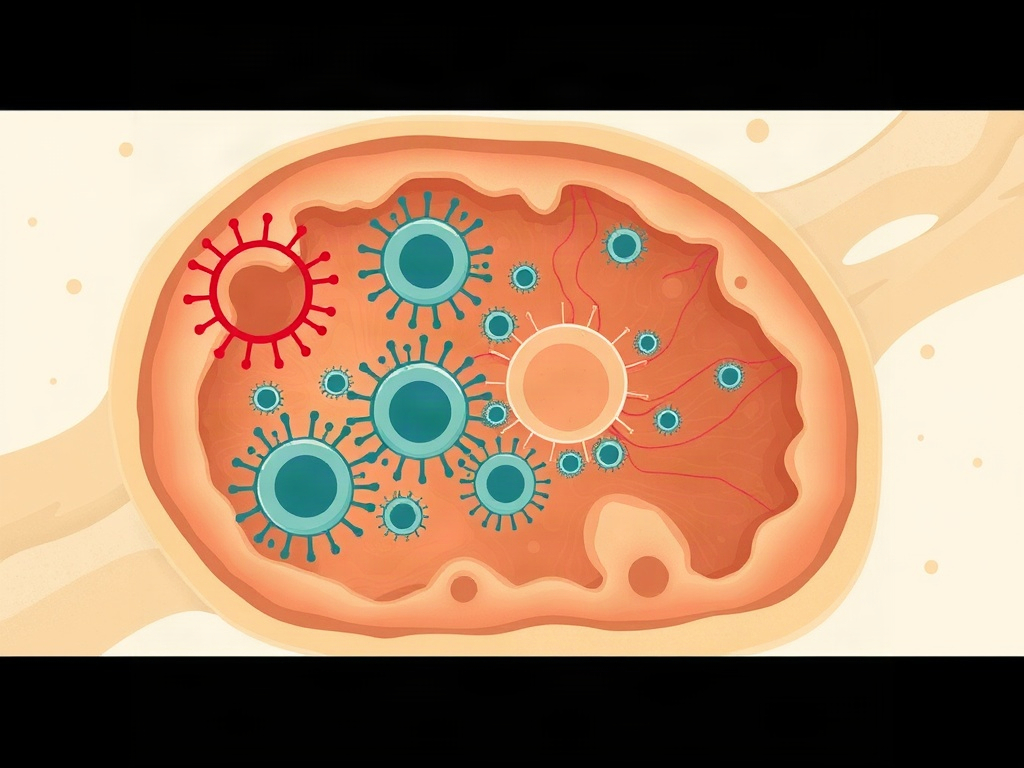
Published in Nature Aging, the study by Gabandé-Rodríguez, Soto-Heredero, and colleagues identifies an accumulation of cytotoxic CD4+ T cells — a rare subset that acquires CD8-like killing capacity — within the bone marrow during normal aging. These cells produce elevated levels of CCL5, a chemokine that signals through the CCR5 receptor on hematopoietic stem and progenitor cells to promote myeloid-biased differentiation. Critically, pharmacological blockade of CCR5 reversed this myeloid skewing and was associated with measurable improvements in healthspan metrics in aged mice, suggesting the axis is not merely correlative but functionally causal.
This work is notable for several reasons beyond its mechanistic novelty. CCR5 antagonists already exist as FDA-approved drugs — most prominently maraviroc, developed for HIV treatment — meaning translational pathways are unusually accessible compared to gene-targeting strategies. The convergence of cytotoxic CD4+ T cells, bone marrow niche biology, and a druggable chemokine receptor represents a rare trifecta for geroscience. That said, important caveats apply: the causal evidence is from aged mice, and whether human bone marrow harbors the same CCL5-high cytotoxic CD4+ population at equivalent frequencies remains to be established. Myelopoiesis is also tightly context-dependent, so long-term CCR5 inhibition carries immunological trade-offs worth scrutinizing. Still, this is an incremental-to-paradigm-shifting finding — more confirmatory human data could make it genuinely transformative for inflammaging research.