When extreme climate events intersect with food systems built around a single resource — livestock — the nutritional fallout can outlast the drought itself. That is the central lesson from a rare multi-year prospective study tracking Daasanach pastoralists in northern Kenya before, during, and after the 2020–2023 Horn of Africa drought, the most severe in four decades. The findings suggest climate-driven dietary disruption is not merely temporary hardship but may accelerate permanent structural change in traditional food cultures.
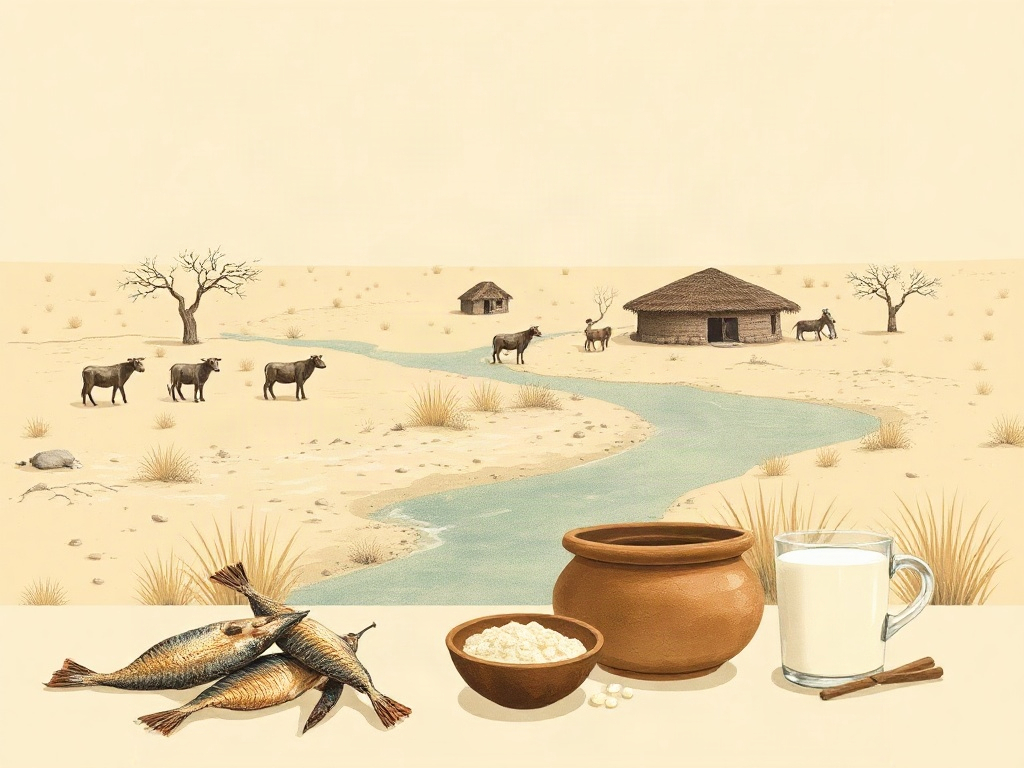
Researchers followed 515 adults and 384 children across five years using an interdisciplinary panel design, measuring water and food insecurity, dietary composition, mobility patterns, and anthropometric nutritional status. Livestock herds collapsed dramatically and showed negligible recovery by 2024. Milk consumption fell sharply but eventually rebounded, while meat intake dropped and remained depressed a full year after drought conditions eased — a potentially irreversible dietary shift. Notably, fish consumption rose despite carrying cultural stigma, suggesting that existential food pressure can override long-standing taboos. Reduced herd mobility continued post-drought, pointing toward accelerating sedentarization of a traditionally nomadic group. Nutritional status deteriorated as the drought progressed, with children who maintained milk access faring significantly better. Women bore disproportionate burdens: greater food and water insecurity and steeper losses in body fat at peak drought than men.
This study stands out for its longitudinal prospective design — most climate-nutrition research relies on retrospective or cross-sectional data, making causal inference difficult. The Daasanach context is highly specific, limiting direct generalizability to other pastoralist or food-insecure populations. Still, the finding that dietary and mobility changes persist well beyond the acute crisis period is significant. It challenges the assumption that pastoralist communities are simply resilient and self-correcting. The persistent meat reduction and rising fish consumption may eventually alter micronutrient profiles in ways that take years to manifest clinically. For global nutrition researchers, this study is a methodological template and an early empirical signal that climate change is not merely stressing traditional diets — it is transforming them.