Adolescent sleep deprivation is not merely a lifestyle inconvenience — it is a measurable public health burden linked to depression, metabolic dysfunction, impaired learning, and elevated accident risk. The question of whether non-pharmacological, scalable tools can meaningfully correct the chronic circadian misalignment most teenagers experience during the school year now has a more rigorous answer.
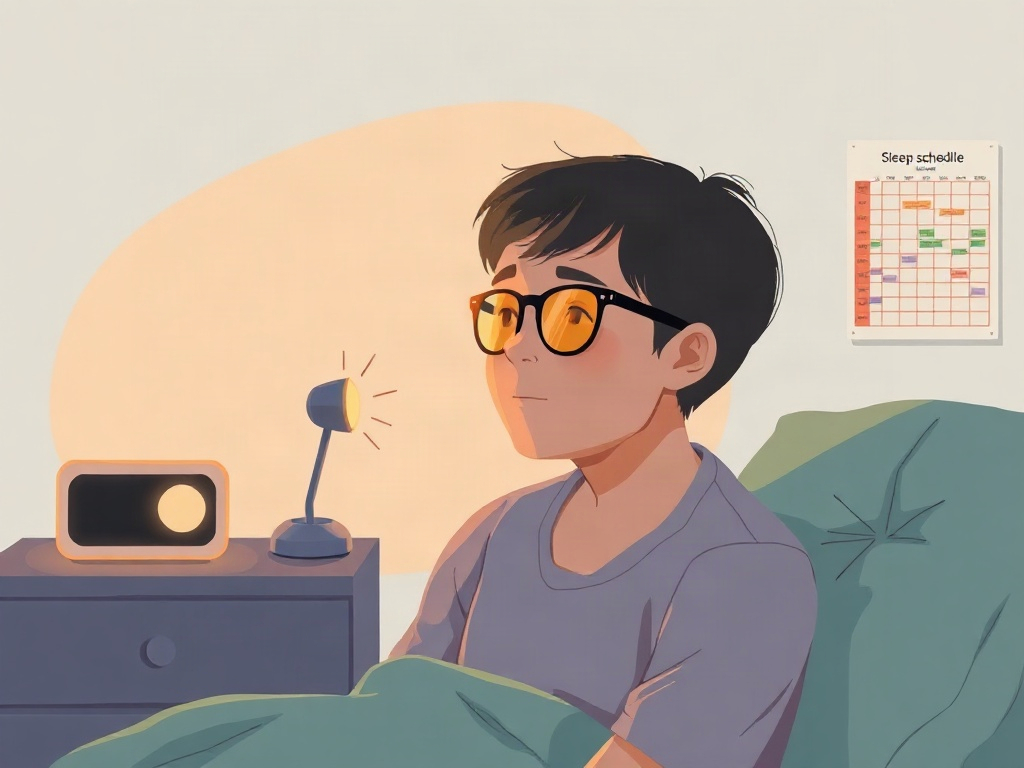
This randomized clinical trial, published in JAMA Pediatrics and conducted across school months from 2018 to 2024 at an academic medical center, enrolled adolescents aged 16 to 19 who habitually fell asleep after 1 a.m. on weekends — a population representing the most circadian-delayed end of the teenage spectrum. Participants assigned to the Sleeping Late Teens Program received a single collaborative problem-solving session under an hour, followed by a two-week personalized sleep schedule shifting both bedtimes and wake times earlier. They also wore morning bright-light glasses for 30 to 60 minutes upon waking and amber-tinted blue-light blocking glasses for two hours before bedtime. The control group wore sleep monitoring devices only. Outcomes were analyzed on an intention-to-treat basis, capturing weeknight sleep duration and objective measures of circadian timing.
What makes this trial notable is its integration of three simultaneous chronotherapeutic levers — behavioral scheduling, morning photostimulation, and evening blue-wavelength suppression — rather than testing any single element. This mirrors growing consensus in sleep medicine that circadian phase is most effectively shifted through combined zeitgeber manipulation. However, the two-week intervention window raises durability questions: behavioral chronotherapy effects are known to erode once structured support is withdrawn, particularly when school start times remain fixed and social pressures persist. The sample was also limited to a narrow age band of circadian-delayed teens, limiting generalizability to younger adolescents or those with moderate delays. Still, the low-burden, low-cost design — no medication, no clinician-intensive sessions — makes this an incrementally significant contribution to implementable adolescent sleep medicine.