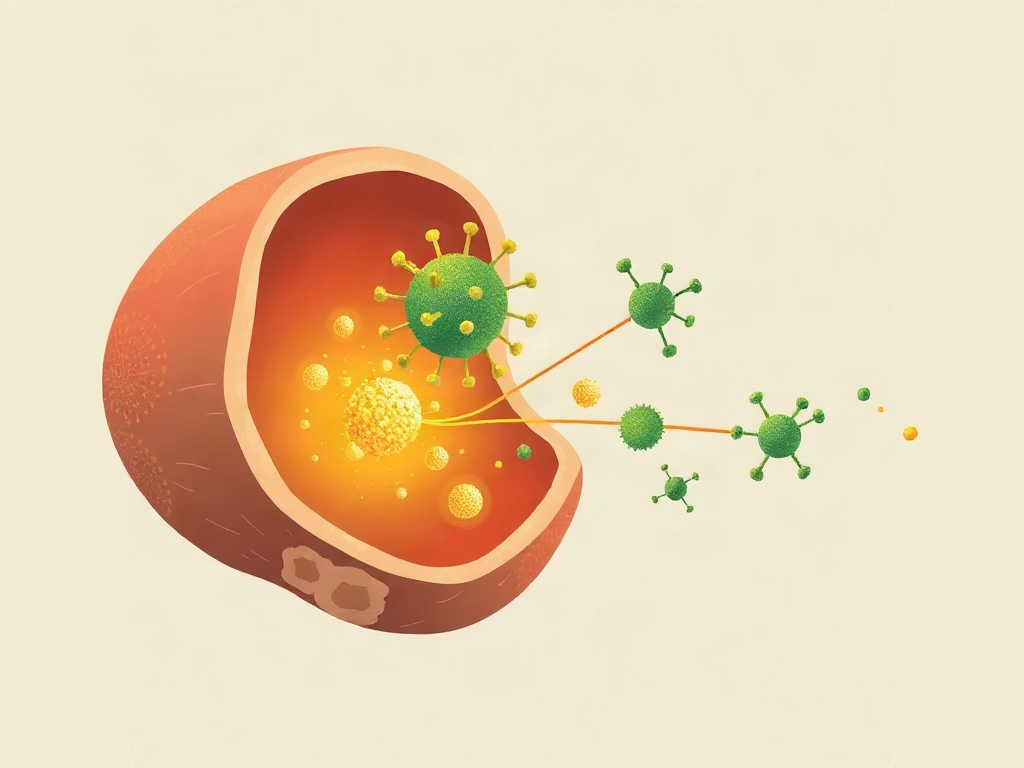
Obesity doesn't just add weight — it fundamentally rewires the immune system in ways that linger even after weight loss, leaving the innate immune defenses blunted precisely when cancer risk is elevated. A finding from Cell Reports now suggests a dietary pathway to interrupt that cycle, with implications for how we think about nutrition, immune resilience, and cancer biology.
Using a high-fat diet mouse model, researchers demonstrated that oral supplementation with yeast-derived beta-1,3/1,6-glucan reshapes immunity at the root level: hematopoietic stem and progenitor cells in the bone marrow undergo epigenetic and metabolic reprogramming — a process known as trained immunity — producing monocytes and macrophages with enhanced anti-tumor effector capacity. Crucially, this effect was achieved through the gut-bone marrow axis rather than via injection of microbial ligands, which had been the only established route for inducing trained immunity in vivo. The reprogrammed innate immune cells restored tumor surveillance in obese mice and, notably, corrected immune dysfunction that persisted even after the animals returned to normal weight — a finding that distinguishes this intervention from simple caloric or metabolic correction.
The concept of trained immunity — where innate immune cells acquire a form of epigenetic memory after prior stimulation — has generated intense scientific interest, but it has largely been explored through parenteral routes (intravenous or subcutaneous injection of compounds like beta-glucan or BCG vaccine). This study's contribution is showing that a dietary, orally bioavailable form of beta-glucan can achieve similar hematopoietic reprogramming, positioning it as what the authors call an 'immuno-nutrient.' That framing is intellectually compelling, though important caveats apply: this is exclusively a mouse study, and translation to humans requires dose-finding, long-term safety assessment, and evidence that the mucosal-bone marrow axis functions analogously in humans. Still, for the longevity and immune-health space, the idea that a food-derived supplement could durably recalibrate innate immunity without metabolic side effects represents a genuinely novel mechanistic angle worth watching.