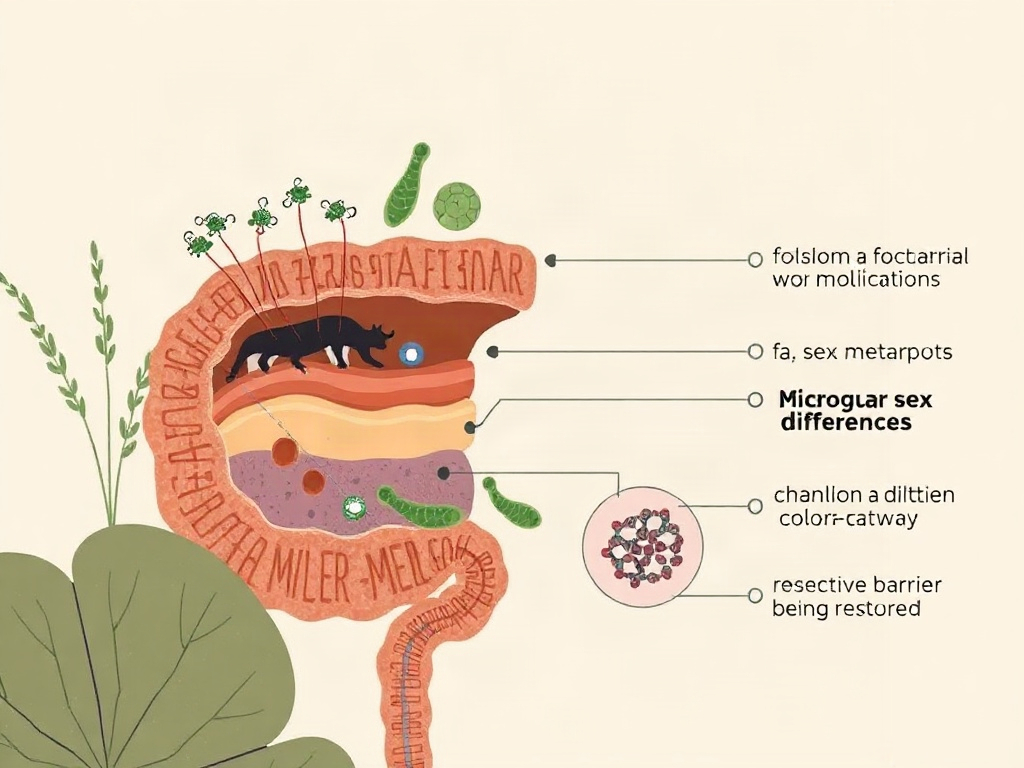
Intestinal barrier failure is one of the deadliest and least-addressed consequences of severe malnutrition — bacteria that cross a compromised gut lining trigger systemic infections that kill children even after nutritional rehabilitation begins. A finding published in PNAS reframes this problem by identifying a specific microbial metabolite that may restore that barrier, and by revealing that the dysfunction itself is profoundly sex-dependent — a dimension current clinical guidelines ignore entirely.
The research centers on isovalerate, a short-chain fatty acid derivative produced by gut microbiota during amino acid fermentation. In malnourished animal models, isovalerate supplementation was associated with measurable restoration of gut barrier integrity, reducing bacterial translocation across the intestinal epithelium. Critically, the protective effect operated differently across sexes, with distinct regulatory mechanisms governing barrier function in male versus female subjects. The study dissects how malnutrition disrupts microbiome composition in ways that deplete isovalerate-producing bacterial populations, creating a feedback loop of worsening barrier dysfunction that standard refeeding protocols do not interrupt.
This work sits at the intersection of two underexplored fields: the metabolite-level crosstalk between the microbiome and intestinal epithelium, and biological sex as a modulatory variable in gut physiology. Most microbiome-barrier research has treated sex as a confounder to control rather than a mechanistic variable to explain — this study pushes against that convention meaningfully. Isovalerate itself has received limited attention compared to butyrate or propionate, the more studied short-chain fatty acids, so this finding opens a relatively uncrowded research avenue. Key limitations apply: the work appears to rely on animal models, and translation to human malnourished populations — particularly children in low-resource settings — requires clinical validation. Still, the sex-specific framing and the identification of a targetable metabolic pathway represent a genuinely novel conceptual contribution, elevating this beyond incremental work even if clinical application remains distant.