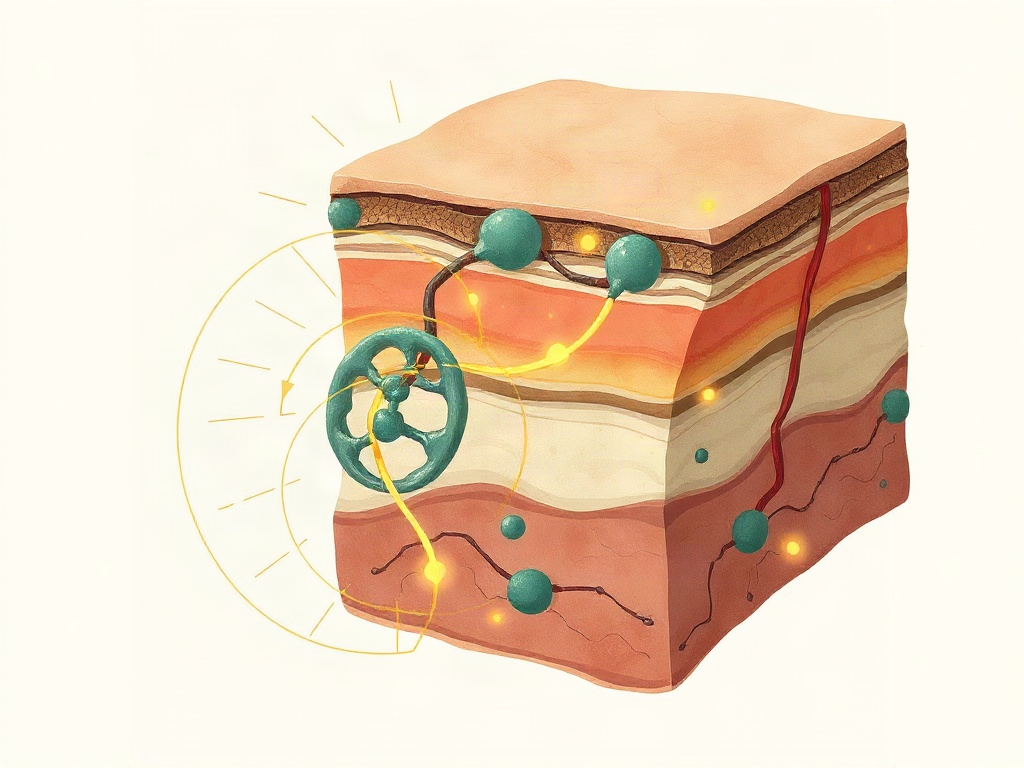
Chronic low-grade inflammation — sometimes called 'inflammaging' — is one of the most consequential features of biological aging, linked to everything from frailty to cancer risk. What has remained elusive is precisely how molecular clocks and mechanical signaling converge to tip skin tissue from homeostasis into persistent inflammatory states. New findings from Nature Aging offer a specific mechanistic answer that reframes how researchers should think about both circadian biology and epidermal aging.
The study identifies an unexpected collaboration between BMAL1 — a core transcription factor in the circadian clock machinery — and YAP, a mechanosensitive co-activator central to the Hippo signaling pathway. In younger epidermal tissue, this BMAL1-YAP partnership operates at gene-regulatory enhancers to maintain normal skin homeostasis. The critical shift in aged skin is not simply that this partnership weakens; rather, it intensifies specifically at enhancers governing pro-inflammatory gene programs. This dysregulated amplification is not driven by the circadian clock rhythm itself but by age-associated changes in the tissue microenvironment, suggesting the inflammation is fundamentally noncircadian in character — a distinction with significant mechanistic implications.
This finding sits at the intersection of two rapidly evolving fields: circadian biology and mechanobiology. YAP is well-established as a sensor of tissue stiffness and extracellular matrix changes, both of which are known to shift with aging skin. BMAL1 has been studied primarily in rhythmic contexts, so its noncircadian role here as an inflammatory amplifier is genuinely novel. The work challenges the assumption that disrupting circadian function is the primary driver of BMAL1-related pathology. From a broader longevity perspective, if similar BMAL1-YAP co-activation occurs at inflammatory enhancers in other aging tissues, this axis could represent a conserved inflammaging mechanism beyond skin. Key limitations include the tissue-specific scope and the need for validation in human aging cohorts at scale. This is an incremental-to-significant mechanistic advance that opens a credible therapeutic target window.