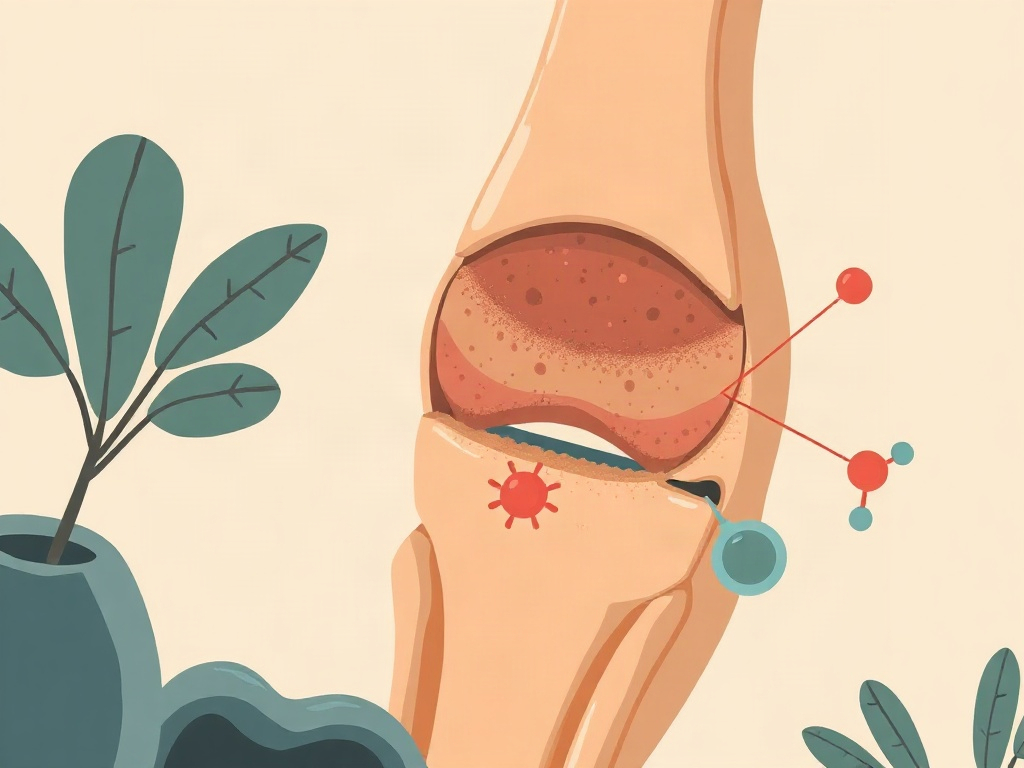
Knee osteoarthritis affects hundreds of millions of adults worldwide, yet every approved treatment addresses symptoms rather than the biological processes driving cartilage destruction. A comprehensive review now maps the molecular case for senotherapeutics — drugs designed to either eliminate senescent cells or neutralize their inflammatory output — as a potential disease-modifying strategy for one of the most disabling conditions of aging.
The review centers on how chondrocytes, the cartilage-maintaining cells in joints, accumulate irreversible cell-cycle arrest with age. Unlike healthy cells that either function normally or self-destruct, these senescent chondrocytes persist and secrete a cocktail of pro-inflammatory cytokines, proteases, and signaling molecules collectively called the senescence-associated secretory phenotype, or SASP. SASP not only degrades the local joint environment but also converts neighboring chondrocytes into senescent cells via autocrine and paracrine loops, creating a self-amplifying cycle of cartilage breakdown. The review details how senescent cells resist not only apoptosis but also alternative cell-death programs including ferroptosis and pyroptosis — a finding that explains why the senescent burden is so difficult for the body to resolve naturally. Both senolytics, which selectively kill senescent cells, and senomorphics, which suppress SASP without clearing cells, demonstrated efficacy in preclinical in vitro and in vivo models. Multiple clinical trials are now underway to translate these results.
This review arrives at an inflection point for the OA field. The senescence-first framework challenges the conventional inflammation-centric or mechanical-wear model, implying that targeting cellular aging biology — not just joint inflammation — could modify disease trajectory. Critically, the safety profile of senolytics in long-term use remains incompletely characterized; most human trial data are early-phase and limited in cohort size. The intermittent-dosing strategy common in senolytic protocols also complicates direct comparisons across trials. For health-conscious adults, particularly those with early radiographic OA or age-related joint stiffness, this science is incrementally promising but not yet actionable at the clinical level. The assessment is confirmatory of preclinical enthusiasm while honestly flagging the translational gap still to be closed.