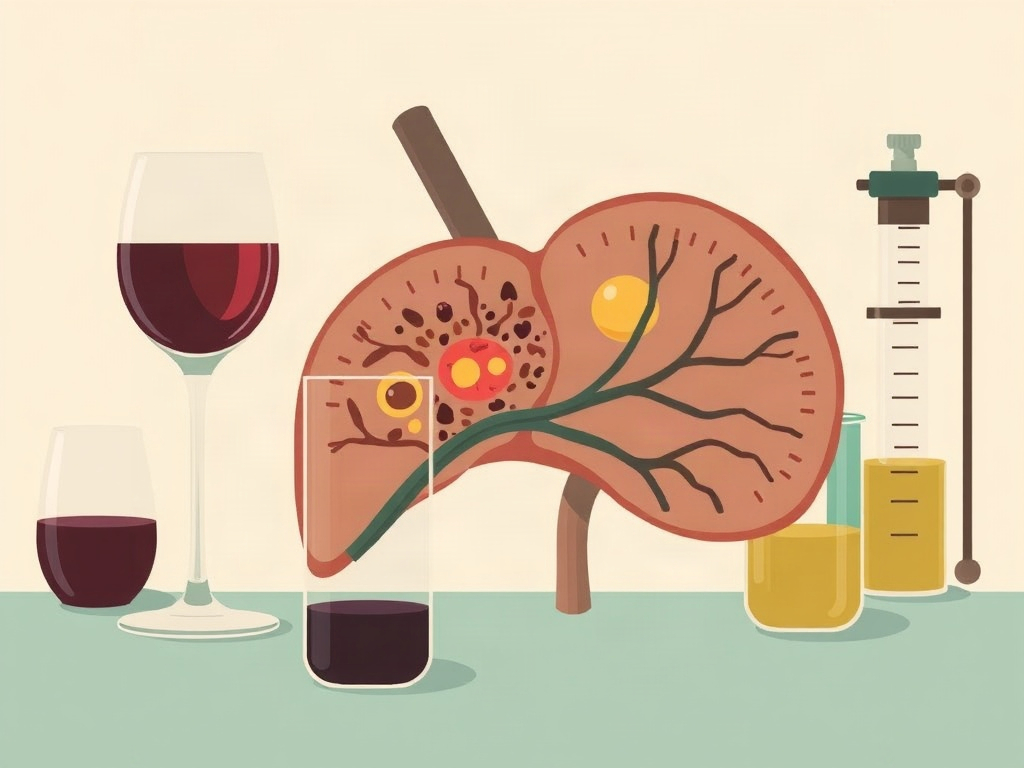
One of medicine's most preventable killers is quietly accelerating. Alcohol-related liver disease now kills at nearly twice the rate it did in 1999, yet most people who have it don't know — a combination that makes this JAMA review more than academic housekeeping. For health-conscious adults who drink even moderately, the thresholds discussed here reframe what 'low-risk' consumption actually means.
The review, published in JAMA, establishes that meaningful hepatic risk begins at consumption levels that many adults would consider moderate: more than 20 grams of ethanol daily for women (roughly 1.4 standard drinks) and more than 30 grams for men (approximately 2.1 standard drinks). These figures correspond to less alcohol than the upper bound of many national dietary guidelines, sharpening the clinical picture around chronic exposure. ALD-related mortality climbed from 6.7 to 12.5 deaths per 100,000 Americans between 1999 and 2022 — a near doubling. The disease spectrum runs from reversible fatty liver through steatohepatitis, fibrosis, cirrhosis, portal hypertension, and hepatocellular carcinoma. Critically, 90% of patients are asymptomatic or report only fatigue until disease is advanced. Genetic variants, female sex, obesity, type 2 diabetes, metabolic syndrome, and viral hepatitis co-infection each compound progression risk.
Several layers of context deserve emphasis. The female-specific threshold — 20 g/day — is lower than thresholds used in older epidemiological literature, reflecting accumulating evidence that women metabolize ethanol less efficiently and sustain hepatic injury at lower cumulative doses. The co-occurrence of metabolic syndrome with alcohol use creates a particularly hostile hepatic environment; so-called 'metabolic-associated steatotic liver disease' and alcohol damage may act synergistically rather than additively. Noninvasive scoring tools like the Fibrosis-4 index now enable earlier detection without biopsy, yet uptake in primary care settings remains inconsistent. As a comprehensive review rather than a novel trial, this article synthesizes existing evidence rather than generating new causal data — its value lies in consolidating clinical thresholds and risk stratification for practicing physicians. For the general population, the core implication is that hepatic risk begins at consumption levels widely normalized in social culture.