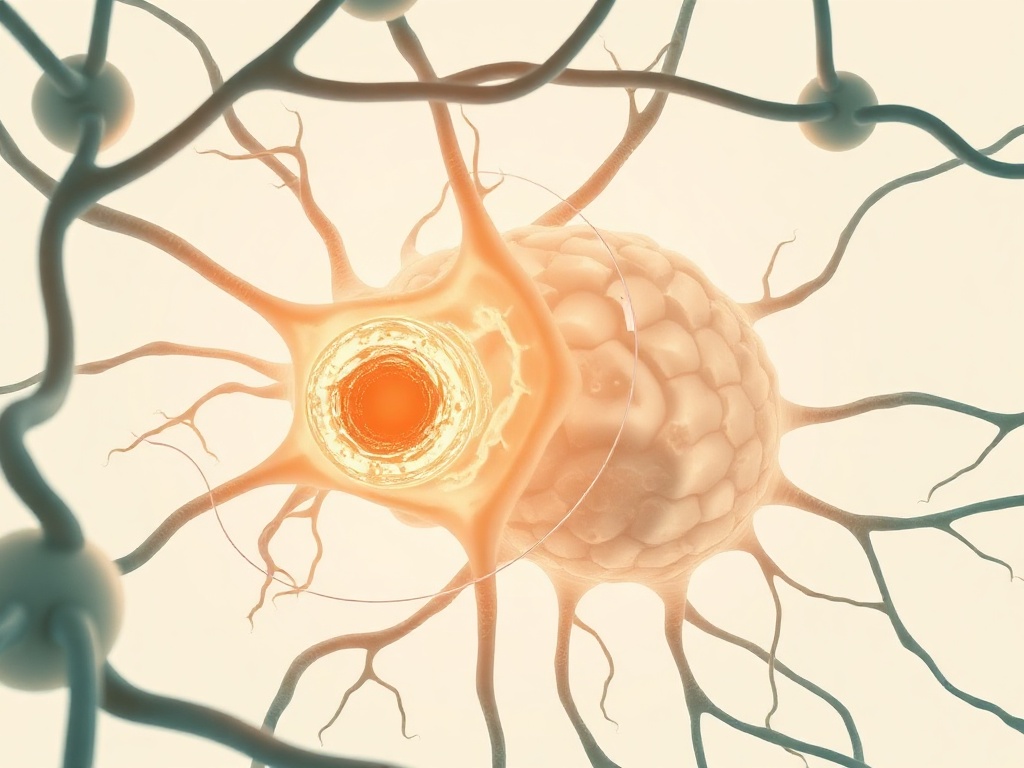
Every hour of deliberate practice spent mastering a skill — reading fine print, distinguishing wine notes, parsing a second language — leaves a structural imprint in the brain. New research from PNAS identifies a specific biological scaffold, the extracellular matrix (ECM), as an active participant in translating sensory experience into lasting perceptual memory, potentially opening new avenues for accelerating skill acquisition in rehabilitation and healthy aging populations.
The study demonstrates that perceptual learning — the process by which repeated sensory exposure sharpens discrimination ability — is mechanistically linked to experience-dependent changes in ECM integrity within relevant sensory cortices. The ECM, a mesh-like lattice of proteins surrounding neurons and synapses, undergoes targeted remodeling following structured practice. Crucially, the research shows this remodeling is not passive wear-and-tear but a regulated process that gates synaptic plasticity, effectively determining how efficiently neural circuits encode perceptual improvements. Disrupting ECM integrity altered both the rate of skill acquisition and the stability of perceptual memory retention, implicating this matrix as a causal, not merely correlational, factor in learning outcomes.
This finding carries meaningful weight in the broader neuroscience of plasticity. Historically, perceptual learning research focused almost exclusively on synaptic potentiation and cortical representational shifts. The ECM has received far more attention in developmental critical-period research — where perineuronal nets, a specialized ECM structure, are known to close windows of heightened plasticity — than in adult skill learning. Positioning the ECM as a dynamic regulator of adult perceptual memory represents a conceptual expansion of that framework. For aging adults, whose ECM composition shifts with age, this could partly explain declining learning efficiency and suggest matrix-targeted interventions as a future therapeutic angle. Significant caveats apply: the mechanistic work appears to rely on animal or in-vitro models, and translation to human perceptual training remains undemonstrated. This is nonetheless a potentially paradigm-shifting finding that reframes learning efficiency as partly a connective-tissue problem, not solely a synaptic one.