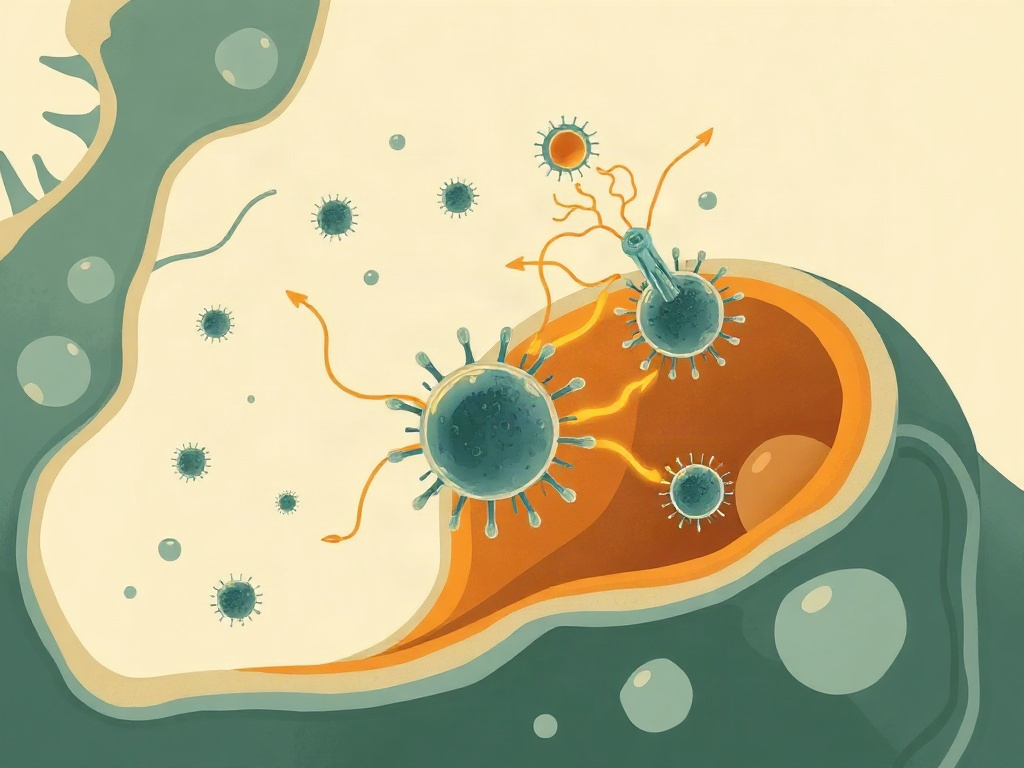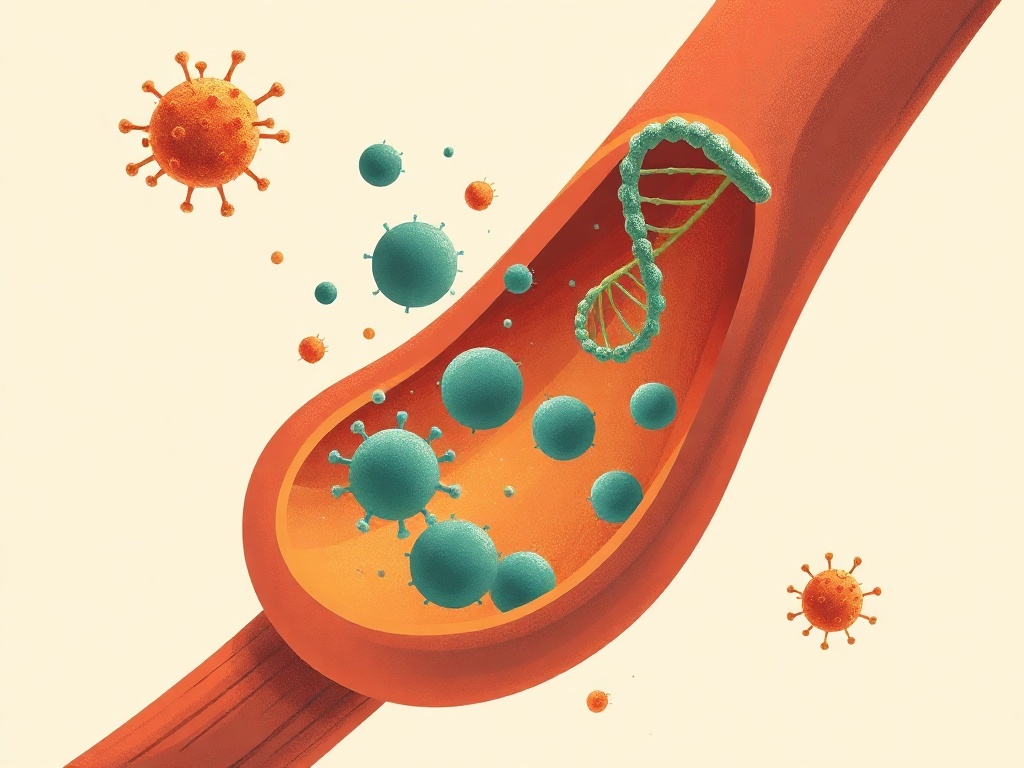
Biological age — what your cells reveal about how fast you are aging — may be shaped years in advance by the immune system's gradual decline. This large-scale prospective analysis adds critical temporal evidence to a field largely built on cross-sectional snapshots, suggesting that immune dysregulation is not merely correlated with accelerated epigenetic aging but may precede and potentially drive it.
Drawing on the Framingham Heart Study Offspring Cohort, researchers measured 43 immune cell phenotypes and 68 inflammatory proteins from blood samples collected between 1998 and 2001, then assessed six distinct DNA methylation (DNAm) biological clocks approximately six years later at the follow-up exam. The scale of the associations was striking: 24 of 43 immune cell phenotypes and 55 of 68 inflammatory proteins showed significant links to at least one epigenetic aging metric in age- and sex-adjusted models. Crucially, immune cell associations remained robust after controlling for cardiovascular disease and its risk factors, while inflammatory protein associations were attenuated — hinting that immune cell composition may be the more independent upstream driver. A notable age-stratified finding emerged: inflammatory protein effects on epigenetic clocks were substantially larger in participants under 60 at baseline, suggesting that midlife inflammatory burden may carry greater biological weight than the same burden in older individuals.
The mechanistic framing here is important. Immunosenescence — the age-related restructuring of immune cell populations — and inflammaging — chronic low-grade systemic inflammation — have long been theorized as engines of biological aging, but prospective human data linking these immune phenotypes to validated epigenetic clocks has been sparse. The differential clock associations are analytically rich: immune cell counts aligned more with first-generation clocks and PhenoAge, while inflammatory proteins tracked more closely with PhenoAge, GrimAge, and DunedinPACE, which are considered stronger predictors of morbidity and mortality. This divergence implies that distinct immune aging mechanisms may operate through separable molecular pathways. As an observational study, causality cannot be established, and residual confounding remains plausible. Nonetheless, the prospective design and breadth of immune phenotyping make this a meaningful contribution that elevates the biological plausibility of immune-to-epigenome aging cascades in humans.