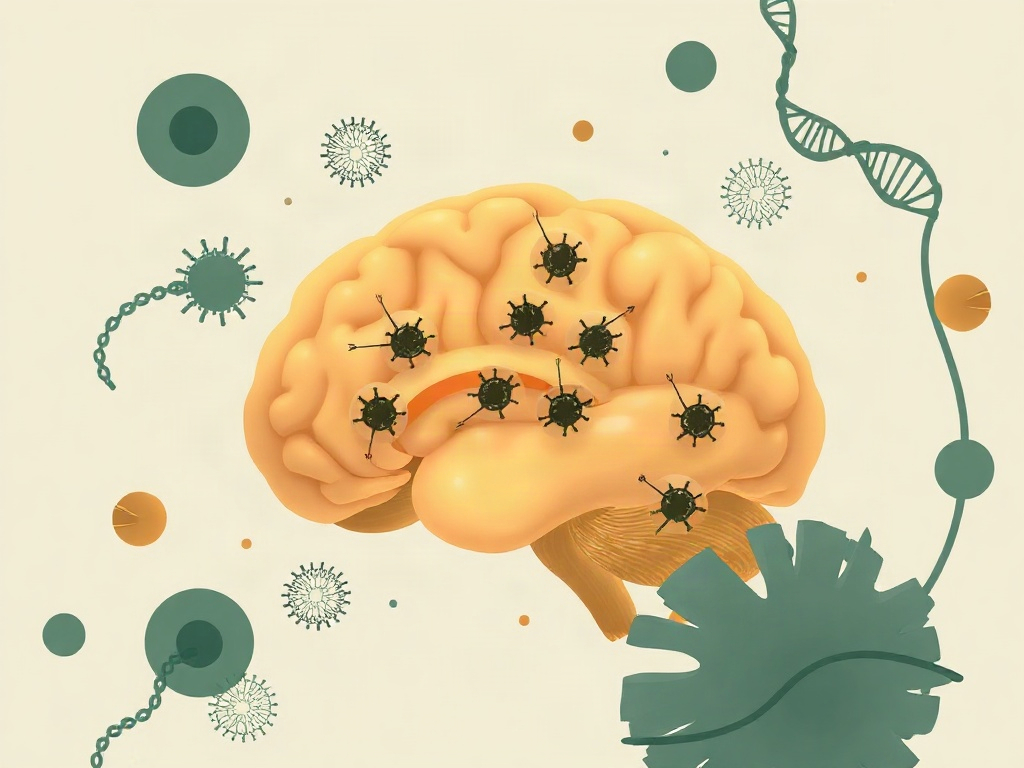
SLE's peak incidence after age 48 masks a deeper truth: even young SLE patients exhibit accelerated immune aging. Chronic T-cell replication drives telomere attrition, DNA damage response activation, and telomerase dysfunction, culminating in a pathogenic CD28⁻CD57⁺KLRG1⁺ senescent T-cell population with heightened cytotoxicity and collapsed regulatory function — directly correlating with disease activity and organ damage. Simultaneously, age-associated B cells (ABCs) accumulate and produce high-affinity anti-dsDNA autoantibodies, while a senescent bone marrow microenvironment and clonal hematopoiesis skew monocytes toward pro-inflammatory M1 polarization with reduced phagocytic capacity and amplified SASP-like cytokine secretion.
This synthesis reframes SLE not merely as a failure of self-tolerance but as a disease of accelerated biological aging in immune tissue — a distinction with major therapeutic consequence. The immunosenescence-SLE axis is gaining traction as researchers recognize that standard immunosuppressants do little to reverse cellular senescence or SASP. Emerging senolytic and senomorphic strategies — compounds that selectively eliminate senescent cells or suppress SASP — represent a genuinely novel therapeutic vector. Navitoclax, dasatinib/quercetin combinations, and JAK inhibitors partially targeting SASP are already under investigation in aging contexts. However, this is a review article synthesizing existing literature, not a novel empirical study, so causal hierarchies remain unproven and therapeutic claims are mechanistically inferred rather than clinically validated. For adult patients with refractory SLE, this framework suggests that measuring immunosenescence biomarkers alongside standard activity indices could refine prognosis and eventually guide senescence-targeted therapies.