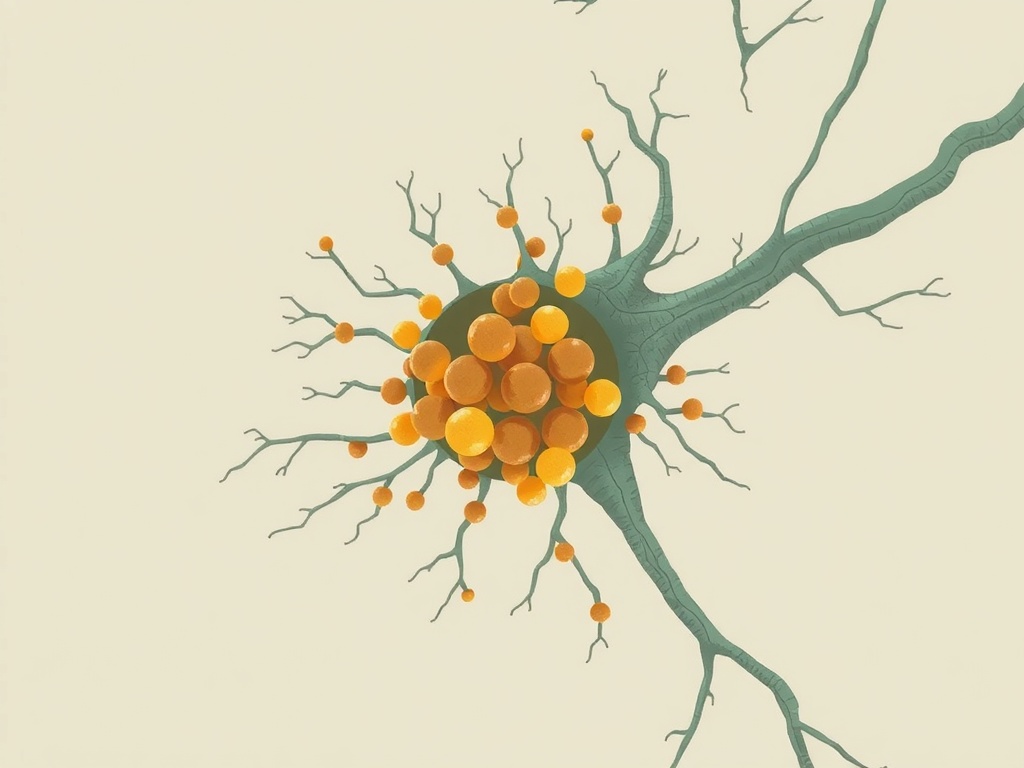
For decades, amyloid plaques have dominated the narrative of Alzheimer's disease pathology — but mounting evidence suggests the full picture is far more complex. The discovery of an entirely new class of pathological structures in both mouse models and human postmortem brain tissue reframes how we understand the cellular breakdown that defines this disease, and may help explain why anti-amyloid strategies alone have yielded limited clinical success.
Using a genetically engineered triple-transgenic mouse line (APP/PSEN1/mt-Keima) that carries a fluorescent mitophagy reporter, investigators documented the emergence of large, abnormal accumulations of mitochondria within neuronal processes — structures now designated mitochondrial plaques (MPs). These plaques contain both acidic and neutral mitochondria, indicating a mixed population of organelles at different stages of attempted degradation. Critically, lysosomes are recruited to MPs as a compensatory response, but their functional capacity is impaired, leaving mitochondrial clearance incomplete. MPs were found to co-develop with amyloid to form hybrid mixed plaques, yet they also appear independently, notably at early disease stages. The phenomenon was confirmed in the 5xFAD mouse model and, most significantly, in postmortem human AD brain tissue.
This finding carries considerable weight in the broader research context. Mitophagy impairment — the failure to selectively clear damaged mitochondria — has been implicated in neurodegeneration for years, but direct in vivo structural evidence of its consequences at the plaque level was absent. MPs now constitute a bona fide pathological entity, not merely a downstream metabolic footnote. The independent early emergence of MPs suggests they may precede or parallel amyloid pathology rather than simply resulting from it, raising the possibility they are mechanistically upstream contributors. For the longevity and brain-health field, this underscores lysosomal health and mitochondrial quality control — not just amyloid clearance — as legitimate therapeutic targets. Limitations include the reliance on mouse models for mechanistic detail and the cross-sectional nature of human tissue observations. Whether MPs actively drive neuronal death or represent failed neuroprotection remains an open and consequential question.