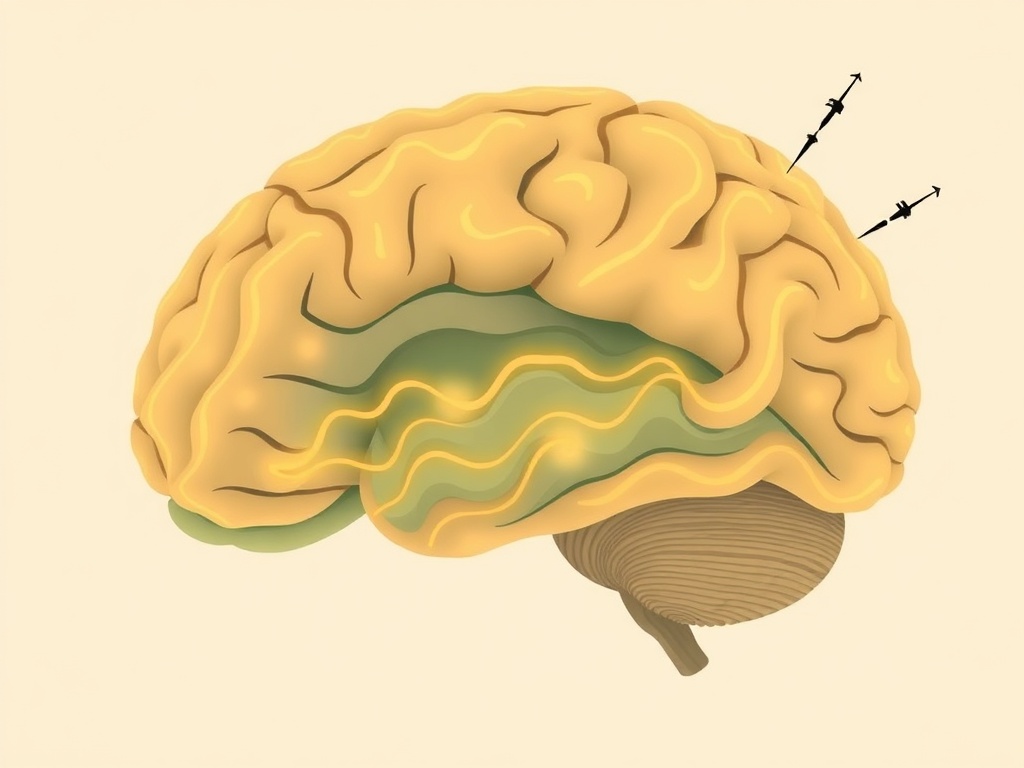
Understanding exactly how the sleeping brain converts daytime motor practice into lasting skill has been a central puzzle in neuroscience—and the answer has profound implications for anyone whose sleep is disrupted, from epilepsy patients to shift workers to aging adults whose sleep architecture deteriorates naturally. New intracranial recording data from humans now provide some of the clearest mechanistic evidence yet for how this conversion actually unfolds.
Using simultaneous deep-brain recordings across three regions—the orbitofrontal cortex, thalamus, and hippocampus—in 19 epilepsy patients undergoing presurgical monitoring, researchers mapped the real-time interplay of slow oscillations, sleep spindles, and high-frequency ripples during overnight consolidation of a motor task. The orbitofrontal cortex emerged as a hierarchical conductor: its slow oscillations (~0.5–1 Hz) modulated spindle activity both locally and across the thalamus and hippocampus, which in turn nested ripple events within those spindles. Critically, hippocampal ripple rate and coupled hippocampal-orbitofrontal ripple co-occurrence were the strongest positive predictors of overnight motor performance gains. The epileptic dimension was equally striking: when pathological spike discharges coupled with slow oscillations, they functioned as a parasitic signal—consuming the same oscillatory windows that normally drive consolidation and reliably predicting performance decrements.
This work sits at the intersection of two long-running debates. The slow-oscillation–spindle–ripple coupling hierarchy has been established in rodents and inferred from human scalp EEG, but intracranial confirmation with behavioral outcomes in awake-performing humans is rare and valuable. The orbitofrontal cortex as a top-level orchestrator—rather than the hippocampus alone—is a meaningful conceptual shift, suggesting that prefrontal sleep quality matters as much as hippocampal activity for motor learning. The 19-patient cohort is modest, and the epilepsy context limits direct generalization to healthy sleepers; disrupted architecture in these patients may amplify effects not visible in typical brains. Still, the mechanistic precision here is incremental-to-significant: it reframes epileptic spikes not merely as neural noise but as active hijackers of a conserved consolidation pathway, opening a therapeutic target for protecting sleep-dependent cognition.