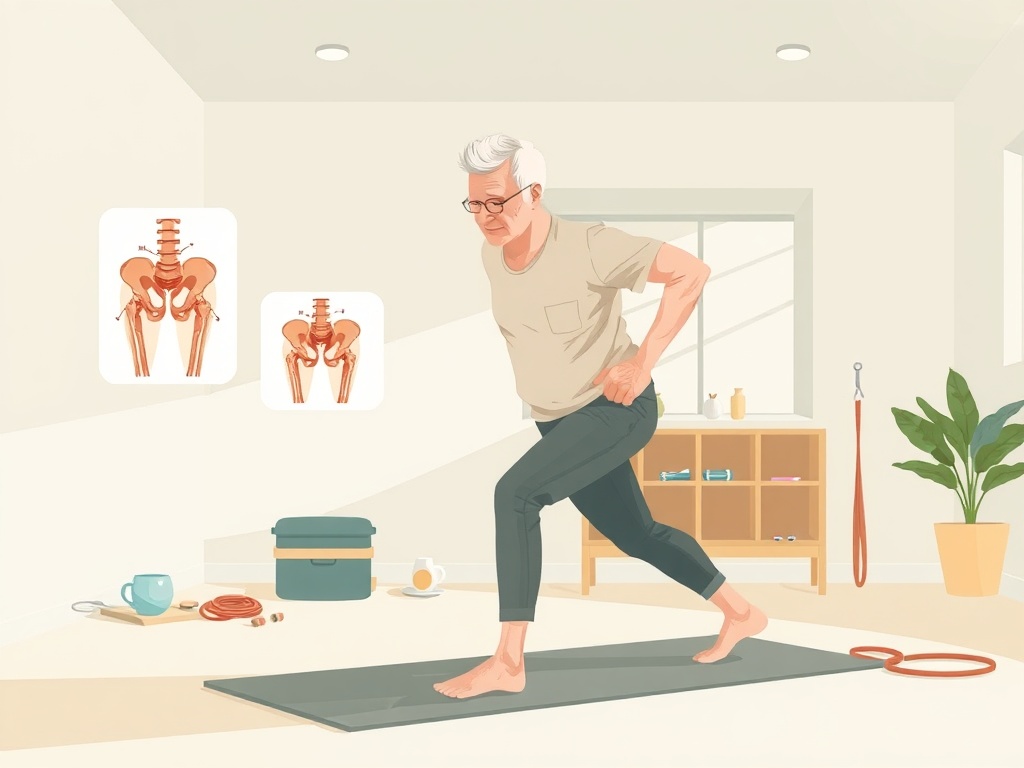
Hip osteoarthritis affects tens of millions of adults worldwide, progressively eroding mobility, independence, and quality of life. Despite being a cornerstone of clinical guidelines, the magnitude of exercise's actual benefit has remained surprisingly contested — until this comprehensive Cochrane update brings the sharpest evidence synthesis to date across a 12-year search window.
This updated systematic review drew on randomized controlled trials of land-based exercise in adults with diagnosed hip osteoarthritis, searching four major databases through February 2025. The eligible comparisons were rigorous: exercise against attention controls or placebo, exercise against usual care or no treatment, and exercise added to a co-intervention versus that co-intervention alone. Critical outcomes tracked were pain intensity, physical function, and health-related quality of life, with secondary attention to participant-reported treatment success, dropout rates, and adverse events. By restricting to RCTs and excluding perioperative programs and unequal co-intervention designs, the review minimizes the confounding that has plagued earlier exercise-and-arthritis literature.
What makes this finding important to place in context is that hip osteoarthritis has historically received far less exercise research attention than knee osteoarthritis — most exercise physiology trials lump the two joints together despite meaningful biomechanical differences. This Cochrane update corrects for that by isolating hip-specific evidence. The finding of modest but measurable benefit on pain and function aligns with the broader musculoskeletal literature suggesting exercise works through multiple mechanisms: strengthening periarticular musculature, improving synovial fluid circulation, and potentially modulating central pain sensitization. Key limitations include heterogeneity across exercise types (aquatic excluded here), variable adherence tracking, and the challenge of blinding participants to exercise allocation. The review's use of the original RoB 1 tool rather than the updated RoB 2 is a minor methodological note. Overall, this is a confirmatory but meaningfully updated analysis — it reinforces exercise as a first-line non-pharmacological intervention, while underscoring that effect sizes remain moderate and individualized programming may determine real-world outcomes.