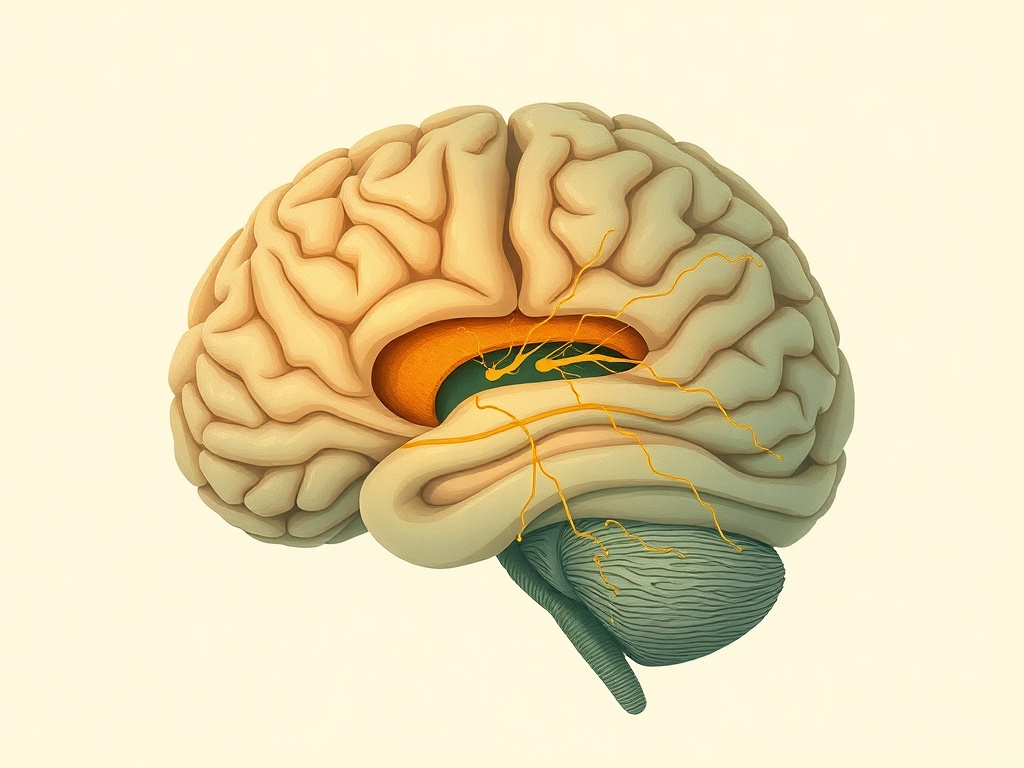
The brain's waste-clearance infrastructure may begin failing earlier in Alzheimer's disease than previously recognized — and a small, often-overlooked structure called the choroid plexus appears to be a measurable signal of that failure. This reframes the choroid plexus not merely as a passive CSF producer but as an active participant in neurodegeneration, with potential value as an imaging biomarker years before clinical symptoms crystallize.
Drawing on the large Alzheimer's Disease Neuroimaging Initiative (ADNI) cohort, researchers integrated structural MRI, amyloid and tau PET, and diffusion tensor imaging to quantify choroid plexus volume and glymphatic function simultaneously across the Alzheimer's continuum. Choroid plexus volume increased progressively with disease stage, while PET signal within the structure declined — suggesting structural hypertrophy paired with functional deterioration. Larger choroid plexus volume correlated with ventricular enlargement, reduced ALPS index (a DTI-derived glymphatic activity marker), elevated cortical amyloid and tau burden, and poorer cognitive scores. Critically, glymphatic impairment statistically mediated part of the relationship between choroid plexus changes and both cognitive decline and pathology accumulation. APP/PS1 transgenic mice reproduced the core MRI phenotypes alongside abnormal protein expression and localization within the choroid plexus.
This work lands at an important intersection of two expanding research areas: glymphatic biology and choroid plexus physiology. Prior human studies established that the ALPS index declines in aging and AD, but mechanistic links to the choroid plexus were largely inferred from animal data. The ADNI scale and multimodal design strengthen causal inference here, though the study remains observational in humans. The mouse model cross-validation is meaningful but not definitive — rodent glymphatic dynamics differ from humans in important respects. Clinically, choroid plexus volume is measurable on standard MRI, making it a potentially accessible, low-cost staging biomarker. Whether choroid plexus-targeted interventions could restore CSF clearance and slow pathology remains an open and compelling therapeutic question.