Most longevity research targets individual organs or molecular pathways in isolation, but a comprehensive review in Nature Reviews Immunology reframes the central question: what if the immune system itself is orchestrating the broader deterioration of the aging body? This perspective has profound implications for how clinicians and researchers might prioritize interventions in older adults.
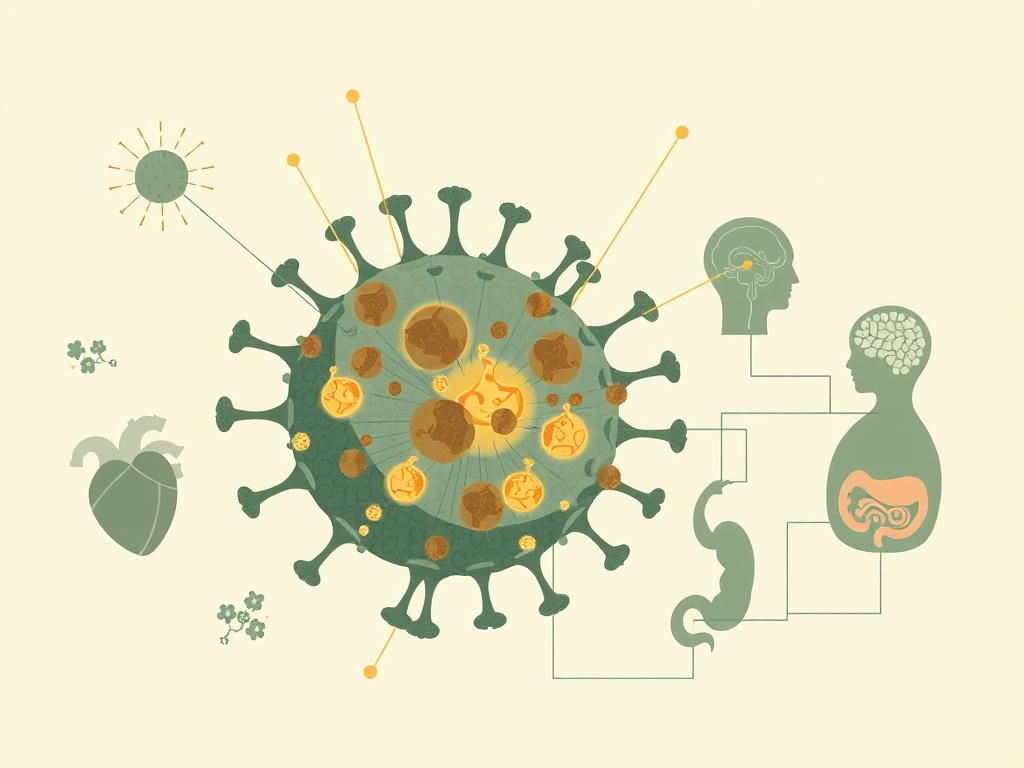
The review synthesizes evidence that aging immune cells converge on three dysfunctional phenotypes — inflammatory, exhausted, and senescent — each driven by overlapping molecular hallmarks including epigenetic drift, mitochondrial dysfunction, telomere attrition, and impaired proteostasis. Critically, these changes operate through both cell-autonomous mechanisms (intrinsic to the immune cell itself) and non-autonomous pathways, meaning dysfunctional immune cells actively secrete pro-inflammatory mediators — components of the senescence-associated secretory phenotype (SASP) — that degrade distant tissues. The review maps these effects across lymphoid organs and non-lymphoid sites including the brain, cardiovascular system, and gut, constructing a mechanistic case for immune aging as a systemic amplifier rather than a mere bystander.
This framing is scientifically consequential. The field has long documented inflammaging — the chronic, low-grade inflammatory state characteristic of older adults — but this review elevates the immune system from correlate to causal agent in multi-organ dysfunction. That distinction matters therapeutically: it shifts the target from suppressing downstream inflammation to restoring upstream immune competence. Approaches discussed include senolytics, mTOR inhibition via rapalogs, and CAR-T cell strategies aimed at clearing senescent cells. A key limitation is that much mechanistic data derives from murine models, which age immunologically differently from humans, and the causal arrows in humans remain challenging to establish. Nevertheless, as a synthesis of the current evidence landscape, this review is paradigm-clarifying rather than paradigm-shifting — it consolidates a growing consensus that immune rejuvenation may be among the highest-leverage targets for extending human healthspan.