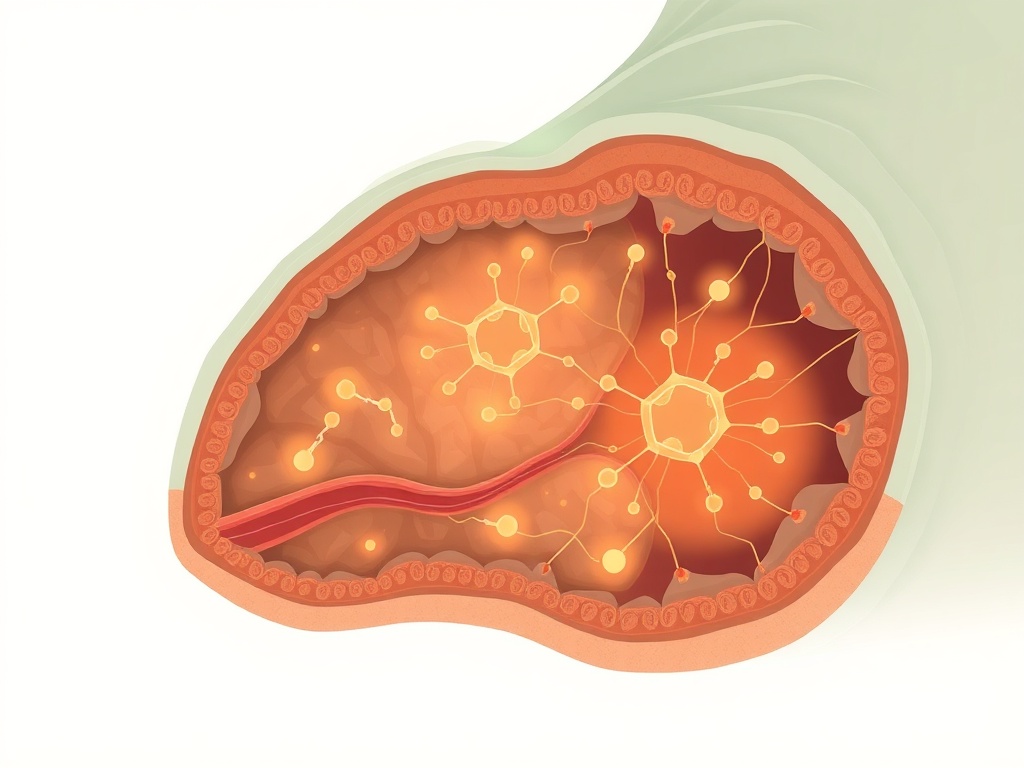
Breast cancer incidence rises sharply after menopause, yet the biological mechanisms underlying that surge have remained frustratingly incomplete. New research published in Nature Aging offers a compelling mechanistic framework: the aging tissue environment itself — not just accumulated DNA damage — actively creates conditions that favor tumor establishment and growth. This reframes older women not simply as patients with more lifetime exposure to risk factors, but as individuals whose systemic biology has shifted in ways that make breast tissue more hospitable to malignancy.
Using a convergent multi-platform approach, Carleton and colleagues integrated findings from an aged rat model, human patient tissue specimens, and patient-derived organoids to characterize how estrogen receptor-positive (ER+) breast cancer biology differs with age. Their analysis pointed to two interacting forces: chronic low-grade inflammation — both systemic and localized within breast tissue — and measurable alterations in estrogen metabolism. Together, these factors appear to remodel the tissue microenvironment in ways that lower the threshold for tumor permissiveness, meaning cancerous cells encounter less biological resistance in older hosts.
This work is particularly notable because it bridges preclinical animal data with human organoid validation, lending translational credibility that single-model studies lack. ER+ breast cancer is already known to respond to endocrine therapies, but the finding that tissue-level inflammatory signaling interacts with estrogen disposition adds a layer of complexity that current treatment paradigms largely ignore. Chronic inflammation in aged tissue — driven by senescent cell accumulation, altered immune surveillance, and changes in adipose biology — likely modulates aromatase activity and local estrogen concentrations in ways that amplify ER+ tumor fitness. The study is limited by its reliance on model systems rather than longitudinal human cohorts, and causality remains to be established. Still, as an integrative characterization of aging-specific tumor biology, this represents a meaningful step toward age-stratified prevention and treatment strategies, rather than treating all ER+ breast cancer as a single biological entity.