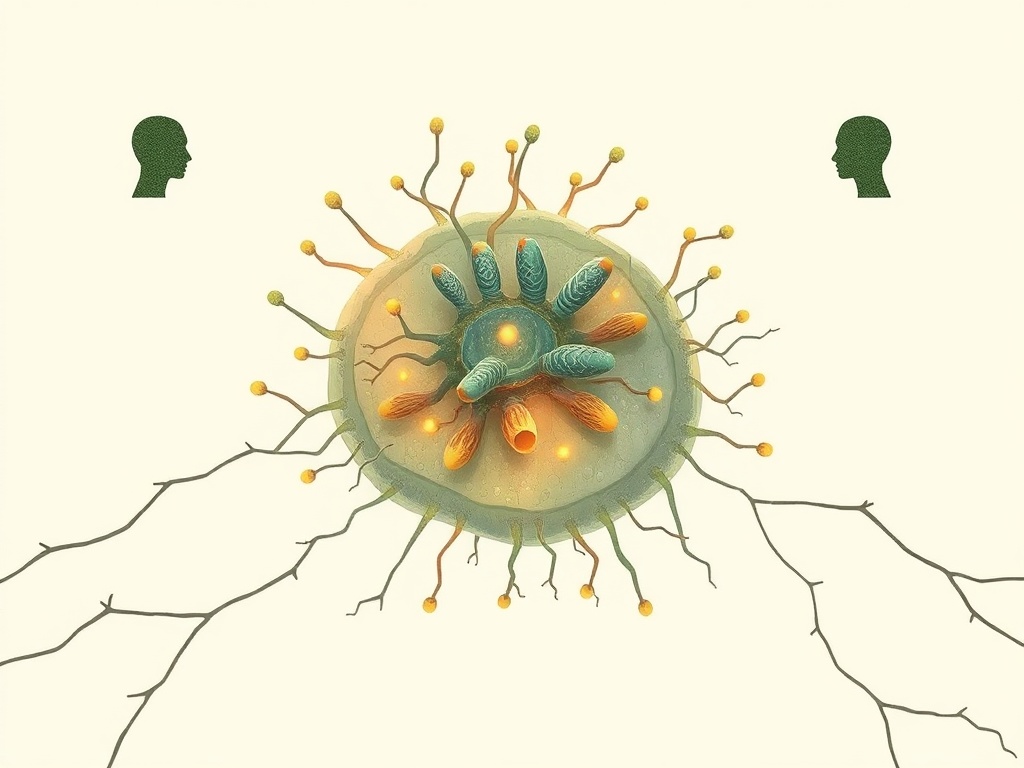
Motivation loss — the inability to muster effort even for rewarding outcomes — is one of the most debilitating and treatment-resistant symptoms across depression, apathy disorders, and burnout. Understanding its cellular machinery could open entirely new therapeutic avenues. New research published in PNAS pinpoints a surprisingly specific molecular lever: the mitochondrial fusion protein Mitofusin-2 (Mfn2), operating inside dopamine D1 receptor-expressing neurons of the ventral striatum, a core node of the brain's reward circuitry.
The study demonstrates that selective manipulation of Mfn2 within these D1 neurons profoundly alters effort-based motivation — the willingness to expend energy to obtain a reward — in a manner that diverges meaningfully between sexes. Rather than simply changing whether animals wanted rewards, alterations in Mfn2 specifically shifted the cost-benefit calculus of effort, implicating mitochondrial dynamics not just in energy supply but in synaptic remodeling that encodes motivational drive. The investigators identify a reprogramming cascade linking mitochondrial morphology changes to downstream synaptic architecture in the nucleus accumbens, providing a mechanistic bridge between cellular bioenergetics and motivated behavior.
This finding matters for several reasons extending beyond the immediate results. Mitochondrial dysfunction has long been associated with mood disorders epidemiologically, but causal, cell-type-specific mechanisms have remained elusive. This work advances the field from correlation to circuit-level mechanism. The sex-specificity is particularly notable: males and females appear to reach motivational deficits through distinct mitochondrial-synaptic pathways, which could explain persistent sex differences in depression prevalence and treatment response that clinical researchers have struggled to account for pharmacologically. Critically, this is a preclinical animal study, and translating findings about nucleus accumbens D1-neuron Mfn2 into human therapeutics faces substantial hurdles around cell-type targeting and delivery. Nevertheless, it represents a potentially paradigm-shifting mechanistic insight — moving the neurobiological conversation about motivation from neurotransmitter levels toward organelle-level dynamics as primary regulators of motivated behavior.