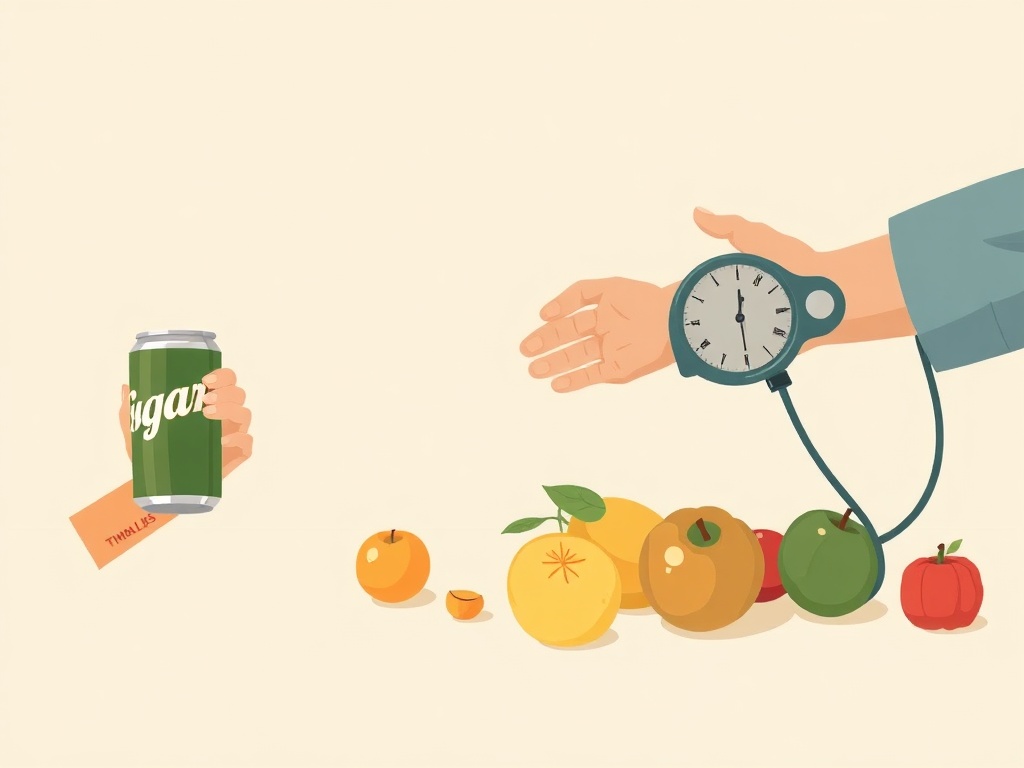
The source of dietary sugar matters far more than its molecular identity — a distinction with real implications for how families and clinicians think about cardiovascular risk starting in childhood. While fructose has long been implicated in metabolic dysfunction, grouping all fructose-containing foods together obscures meaningful differences in how they interact with human physiology over decades.
Drawing on the Growing Up Today Study (GUTS), a longitudinal cohort of nearly 26,000 individuals tracked from an average age of 12 through age 36, researchers examined how cumulative intake of sugar-sweetened beverages (SSBs), fruit juice, and whole fruit from childhood into early adulthood related to incident hypertension. Over up to 25 years of follow-up, 1,625 participants — 6.3% of the cohort — received a hypertension diagnosis. Total fructose intake showed no significant independent association with hypertension risk. However, the source of that fructose proved decisive: SSB consumption at the highest intake levels was associated with meaningfully elevated hypertension hazard ratios compared to the lowest consumers, while whole fruit intake appeared either neutral or inversely associated with risk. Modeled substitutions suggested that replacing SSBs or fruit juice with whole fruit, water, or milk corresponded with lower estimated risk.
This is one of the longest prospective investigations of dietary sugar and blood pressure beginning in childhood, and its strength lies precisely in that longitudinal span — capturing cumulative exposure rather than a dietary snapshot. That said, the study is observational and relies on self-reported food frequency questionnaires, which carry inherent measurement error. Hypertension was also self-reported, not clinically adjudicated, introducing potential misclassification. The cohort skews toward children of registered nurses and is predominantly white, limiting generalizability. Still, the finding reinforces a growing consensus in nutritional epidemiology: food matrix and fiber content fundamentally alter metabolic response to sugar, and whole fruit behaves categorically differently than liquid fructose delivery. For long-term cardiovascular health, beverage choices in childhood may carry consequences that extend well into adulthood.