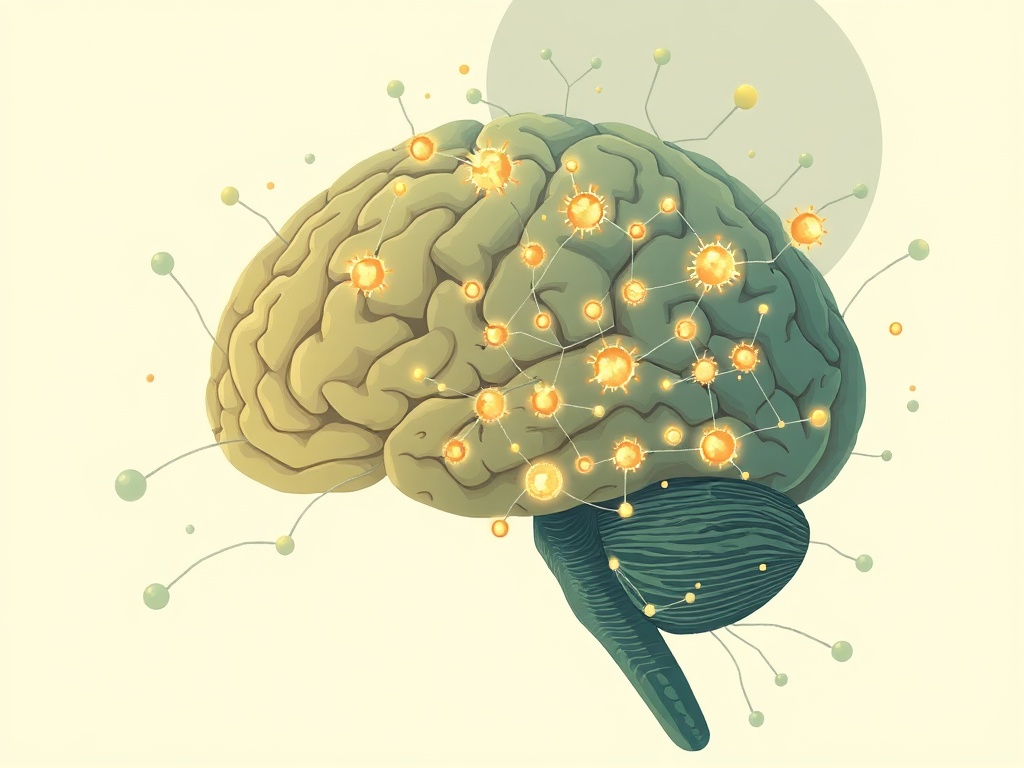
Understanding why neuroinflammation persists long after its initial trigger — and why it selectively devastates aging brains — may hinge on mechanisms operating inside microglia, the brain's resident immune cells. A synthesis published in Ageing Research Reviews reframes microglial biology in ways that could reshape therapeutic targeting across Alzheimer's, Parkinson's, and related conditions.
The review integrates data from single-cell transcriptomics, spatial proteomics, and metabolomics to map how microglia shift their internal metabolism during activation. Rather than simply toggling between pro- and anti-inflammatory states as the classical M1/M2 framework implies, activated microglia orchestrate coordinated reprogramming across glycolysis, the pentose phosphate pathway, and oxidative phosphorylation. These metabolic shifts feed directly into inflammatory signalling cascades — principally NF-κB, HIF-1α, and JAK/STAT — creating self-sustaining loops that maintain neuroinflammation independently of the original stimulus. A metabolic sensor called CARKL appears to modulate crosstalk between HIF-1α and NF-κB, functioning as a molecular rheostat governing the persistence of inflammatory output. Disease-associated microglia (DAM), a subpopulation identified through single-cell sequencing, display transcriptional signatures distinct from any classical polarization state and show notable variation by brain region and biological sex. The synthesis also identifies mitochondrial transfer from microglia to neighboring neurons as a putative neuroprotective mechanism, though details were partially truncated in the excerpt.
This analysis carries real weight for longevity science because chronic neuroinflammation is increasingly recognized as a driver of brain aging independent of protein aggregation. The metabolic-inflammatory circuit described here suggests that targeting upstream metabolic nodes — rather than downstream cytokines — might interrupt pathological microglial states more durably. Key limitations apply: as a review and synthesis rather than primary experimental work, causal claims depend on the quality of the constituent studies, many of which use animal or in vitro models. Sex-specific and region-specific microglial heterogeneity, while compelling, remains incompletely characterized in human tissue. Overall, this is a substantive conceptual advance that elevates the metabolic dimension of neuroinflammation into the center of neurodegenerative research.