Chronic low-grade inflammation — inflammaging — is one of the most potent drivers of age-related disease, yet its molecular origins remain incompletely mapped. A newly identified mechanism linking nuclear R-loop structures to the inflammatory secretions of senescent cells offers a precise molecular target that could eventually reframe how scientists approach suppressing age-associated inflammation without broadly blunting immune defenses.
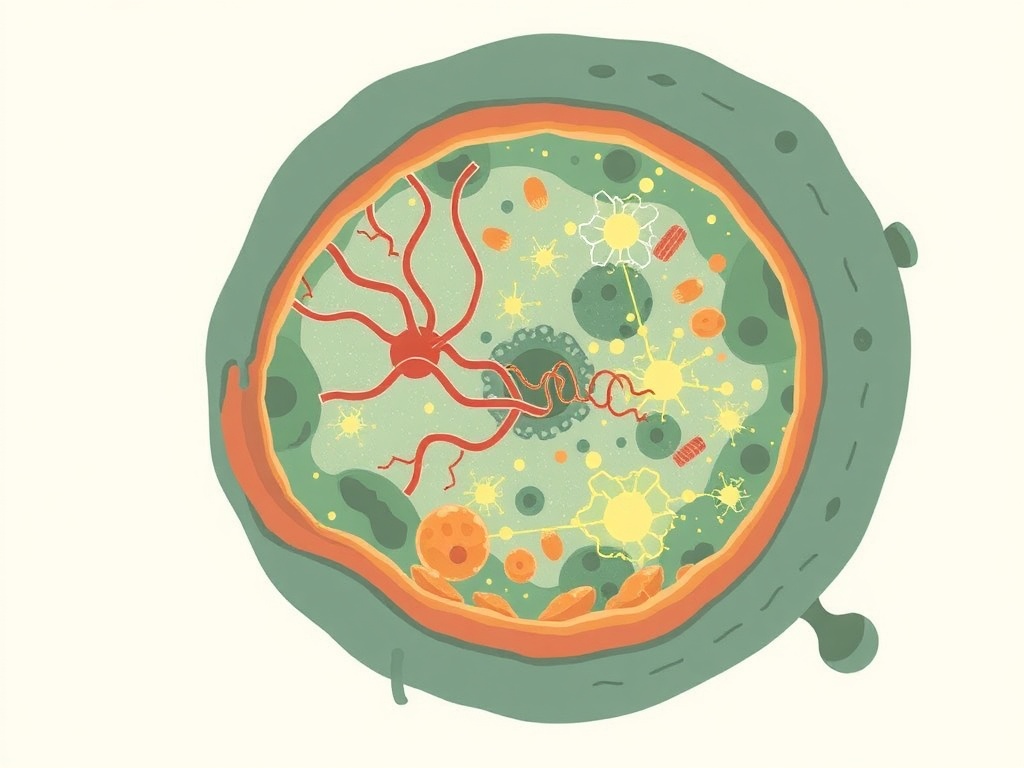
Published in Nature Aging, the study demonstrates that three-stranded RNA-DNA hybrid structures called R-loops, typically studied in cancer biology and genomic instability, accumulate in the nuclei of senescent cells and are actively shuttled into the cytoplasm via a complex formed by the helicase DDX1 and the nuclear export protein XPO1. Once in the cytoplasm, these R-loops — heavily enriched in alpha-satellite repeat sequences from pericentromeric regions — localize into cytoplasmic chromatin fragments (CCFs). From there, they activate the cGAS-STING innate immune sensing pathway, a well-established trigger of the senescence-associated secretory phenotype (SASP). Crucially, pharmacological inhibition of XPO1 using KPT-330 (selinexor) blocked R-loop export, reduced CCF formation, dampened SASP signaling, attenuated systemic age-associated inflammation, and extended healthspan in the model organisms studied.
This finding is potentially paradigm-shifting for several reasons. First, it repositions R-loops from genomic nuisances into active inflammatory mediators in aging tissue — a conceptual expansion with wide implications. Second, it implicates XPO1, a protein already targeted by the FDA-approved oncology drug selinexor, as a lever for geroscience interventions, raising the realistic possibility of near-term translational application. The cGAS-STING axis is increasingly crowded with candidate upstream activators — including cytoplasmic DNA from ruptured micronuclei and mitochondrial DNA — but the R-loop export mechanism introduces a structurally distinct trigger operating through a separable pathway. Key limitations include uncertainty about tissue specificity, potential dose-dependent toxicity of XPO1 inhibition in non-tumor cells, and the need for human aging cohort validation. Nonetheless, this is among the more mechanistically precise contributions to the senescence-inflammation interface in recent years.