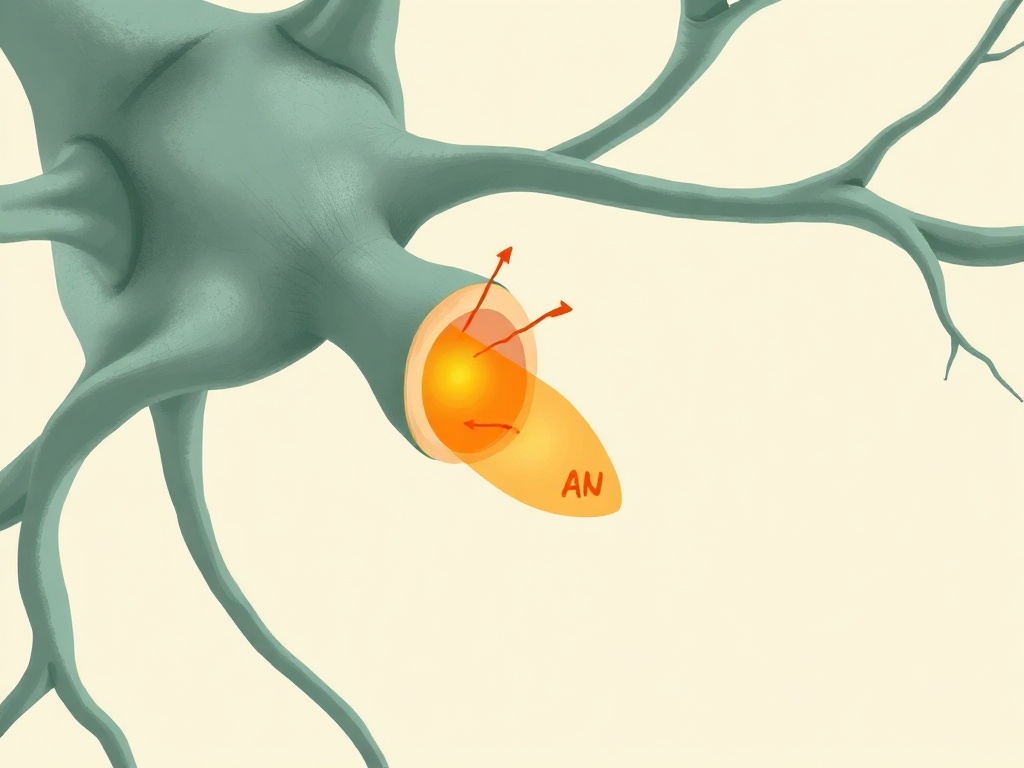
Muscle weakness in aging has long been attributed to shrinking muscle fibers and declining motor neurons — but a new mechanistic discovery reframes the problem at the precise interface where nerve meets muscle, opening a therapeutic window that bypasses the nerve and fiber loss entirely. For the millions of older adults who lose independence due to sarcopenia, this distinction matters enormously: a reversible transmission defect is a far more tractable target than irreversible tissue atrophy.
The research, published in the Journal of Clinical Investigation, identifies a localized depletion of NaV1.4 — the voltage-gated sodium channel exclusive to skeletal muscle — at the post-synaptic membrane of the neuromuscular junction (NMJ) in both aged rodents and older humans classified as weak. This channel loss impairs muscle fiber excitability specifically at the NMJ, creating a transmission bottleneck that correlates directly with the severity of muscle weakness. Critically, the defect is distinct from cholinergic synaptic dysfunction, meaning it operates through a separate mechanism from acetylcholine release or receptor density changes. To establish causality, the team acutely inhibited NaV1.4 in young adult rats using μ-conotoxin GIIIB and reproduced the NMJ transmission failures characteristic of aged animals. On the therapeutic side, inhibiting the ClC-1 chloride channel — which normally dampens muscle excitability — restored NMJ transmission and improved muscle function in aged rodents.
This finding is potentially paradigm-shifting for sarcopenia research. The field has largely pursued anabolic strategies — testosterone, leucine, resistance training — that address fiber size rather than neural-muscular communication fidelity. Identifying a specific ion channel deficit that can be pharmacologically corrected shifts the therapeutic paradigm toward excitability restoration. The ClC-1 inhibitor approach has prior precedent in myotonia research, lending translational credibility. Key limitations remain: rodent-to-human translation of ion channel pharmacology is notoriously unpredictable, the human data are correlational, and long-term safety of ClC-1 inhibition in elderly populations is unknown. Still, this cross-species mechanistic convergence on a single ion channel target elevates this well beyond incremental science.