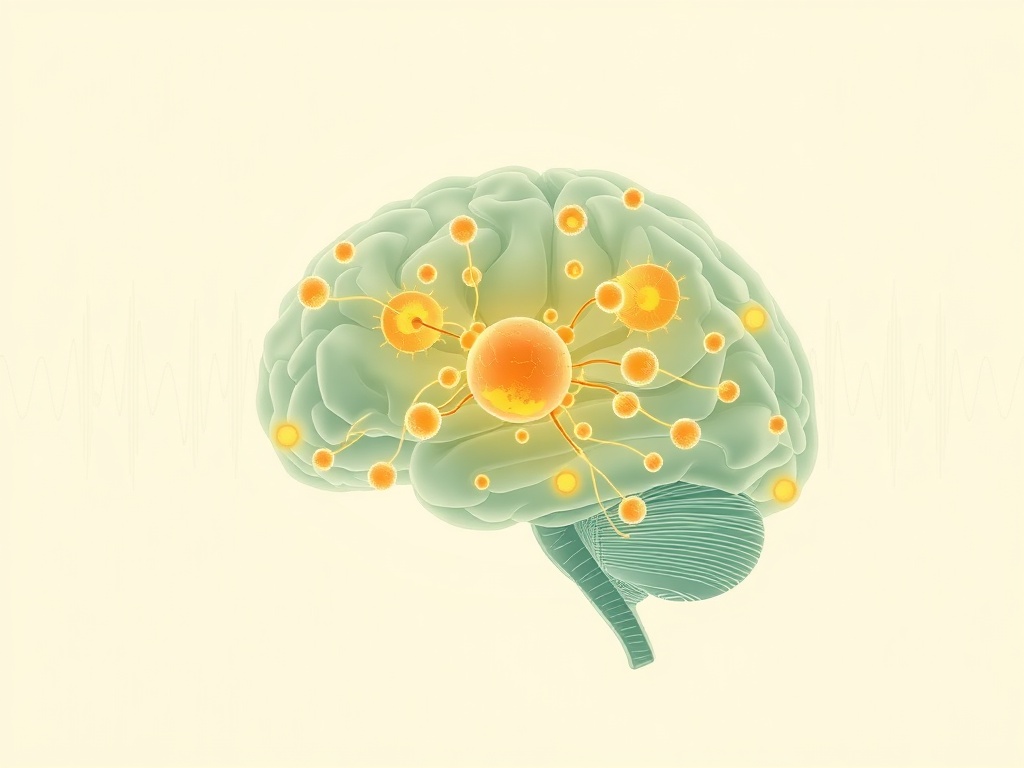
Sleep disruption in Alzheimer's disease has long been treated as a downstream symptom — an unfortunate byproduct of neurodegeneration. This finding reframes that assumption entirely, identifying the brain's own immune cells as an active, causal, and potentially reversible engine of sleep loss that operates independently of plaque accumulation levels.
Using APP/PS1 transgenic mice across multiple stages of amyloid pathology, researchers combined EEG/EMG recordings with whole-brain light-sheet microscopy to map both sleep architecture and neuroinflammation simultaneously. Amyloid plaques triggered NREM sleep loss early, but critically, this deficit did not intensify as plaque burden increased — suggesting the damage mechanism saturates quickly and is not simply proportional to amyloid load. Microglia expanded well beyond plaque-bearing cortical zones, infiltrating thalamocortical circuits and white matter tracts that govern sleep-wake cycling. When microglia were pharmacologically depleted via CSF1R inhibition, animals recovered more than two hours of daily sleep without any reduction in amyloid burden — establishing that microglia, not plaques directly, mediate the sleep phenotype.
This is a meaningful mechanistic advance. The dissociation between amyloid load and sleep loss degree challenges assumptions embedded in therapeutic trials that target plaques as the primary lever for symptom relief. The thalamocortical infiltration pattern is especially notable: these circuits are precisely the structures responsible for generating the slow oscillations and sleep spindles whose disruption is a known early biomarker of AD in humans. Cortical hyperexcitability and network desynchrony observed here align with EEG findings from presymptomatic human carriers of AD-related mutations, lending translational credibility. The principal caveat is that this remains an animal model study; CSF1R-based microglial depletion carries significant immunosuppressive risks in humans and is not a near-term clinical strategy. Still, the framing of EEG sleep metrics as sensitive presymptomatic biomarkers — and microglia as a druggable upstream node — gives this work genuine directional significance for both diagnostics and future neuroinflammatory therapeutic design.