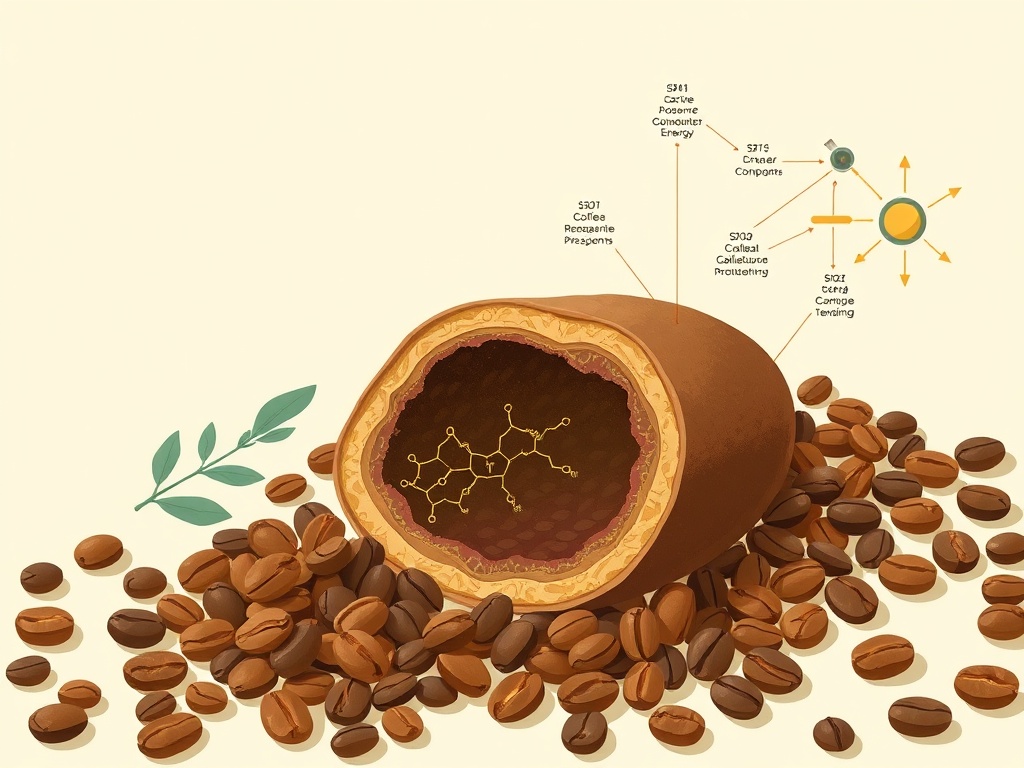
Most adults reach for coffee to sharpen their focus, but the biological story operating beneath that ritual may be far more consequential than caffeine's short-lived neurological effects. A new integrative framework reframes the beverage as a systemic mitochondrial optimizer — a concept with real implications for understanding why coffee drinkers consistently show lower rates of metabolic, neurodegenerative, and cardiovascular disease in epidemiological cohorts.
Published in the Journal of Translational Medicine, this comprehensive review synthesizes molecular, pre-clinical, and clinical evidence to propose that coffee's bioactive portfolio — spanning chlorogenic acids, trigonelline, diterpenes such as cafestol and kahweol, and melanoidins — converges on four interconnected regulatory nodes. These are the AMPK/SIRT1/PGC-1α axis governing energy sensing and mitochondrial biogenesis, the Nrf2/ARE antioxidant defense pathway, PINK1/Parkin-mediated mitophagy for mitochondrial quality control, and mitochondrial calcium signaling networks that modulate metabolic efficiency. Rather than acting through a single target, these compounds appear to act in concert — a polypharmacological profile that may explain the breadth of coffee's epidemiological associations across type 2 diabetes, non-alcoholic fatty liver disease, Parkinson's, Alzheimer's, and cardiovascular conditions.
The framework is genuinely integrative and intellectually coherent, but the authors are appropriately cautious: they explicitly position the model as a hypothesis rather than an established causal mechanism. That distinction matters considerably. The bulk of supporting mechanistic evidence remains preclinical, and translating mitochondrial pathway activation observed in cell cultures or rodent models to meaningful health outcomes in humans is notoriously difficult. The review's greatest value may lie in structuring testable hypotheses for future randomized trials. Coffee's bioactive composition also varies substantially with roasting method, preparation style, and bean origin — a confound that epidemiological studies rarely control for rigorously. For now, the mitochondrial optimizer model is a compelling intellectual scaffold, best viewed as confirmatory context for existing observational data rather than causal proof.