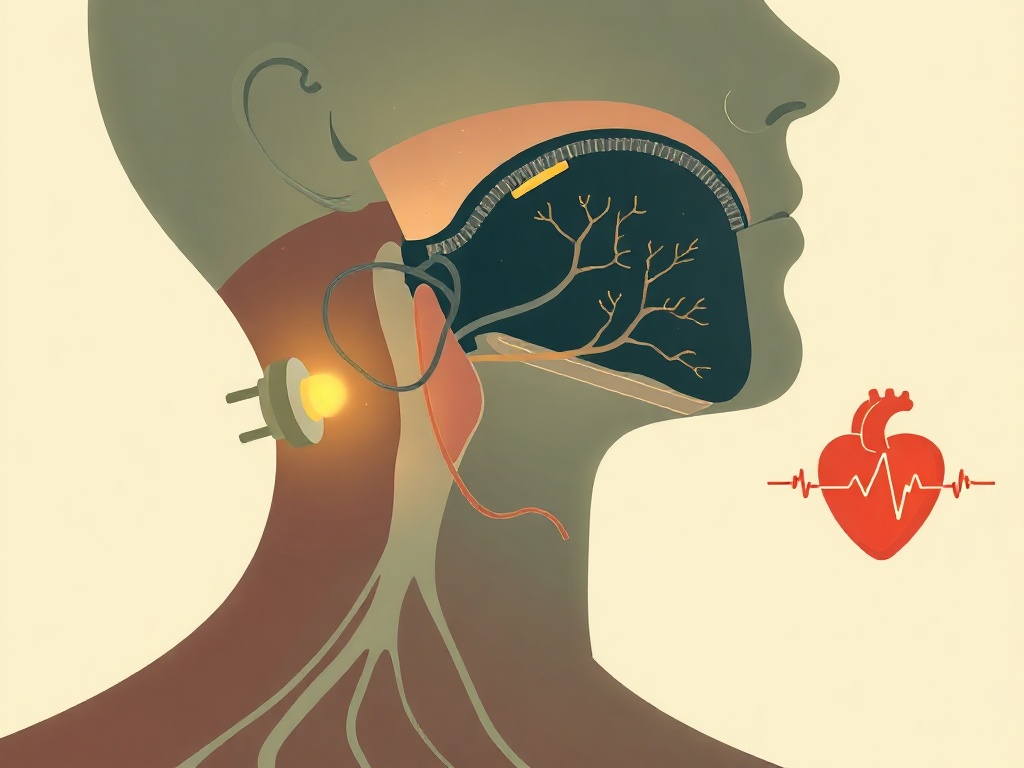
For the roughly 30 million Americans with obstructive sleep apnea who cannot tolerate CPAP, the cardiovascular consequences of untreated apnea — hypertension, arrhythmia, myocardial infarction — accumulate silently over years. A surgical implant that stimulates the hypoglossal nerve to keep the airway open during sleep now has the first substantial real-world evidence suggesting it may interrupt that cardiovascular trajectory.
Using a large US commercial insurance database spanning 2015 to 2024, investigators matched 3,786 adults who received hypoglossal nerve stimulation (HGNS) against 3,395 CPAP-nonadherent controls who met the same candidacy criteria. The analysis modeled HGNS as a time-varying covariate, acknowledging that the implant's physiological effects on cardiovascular endpoints were not expected to manifest until after two years post-implantation. Among patients who had no cardiovascular disease at baseline, HGNS showed no association with new diabetes within two years, but the excerpt strongly implies favorable downstream associations for hypertension and more serious cardiac events. For those with pre-existing diabetes or hypertension, the device appeared to delay or reduce progression to minor and major cardiovascular events — the clinically critical outcomes for this high-risk subgroup.
This is a meaningful but methodologically bounded contribution. The retrospective design using claims data prevents causal inference, and OSA severity at baseline could not be matched between groups — a potentially important confounder, since more severe apnea both drives greater cardiovascular risk and may motivate surgical intervention. The two-year lag assumption in the statistical model, while physiologically reasonable, adds analytical complexity and sensitivity to model specification. Still, the cohort is substantially larger than most prior HGNS outcome studies, which have typically been single-center or registry-based with shorter follow-up. Placed alongside emerging polysomnographic data showing HGNS achieving apnea-hypopnea index reductions exceeding 50% in appropriate candidates, this cardiovascular signal adds a compelling dimension to treatment-selection counseling for PAP-intolerant patients.