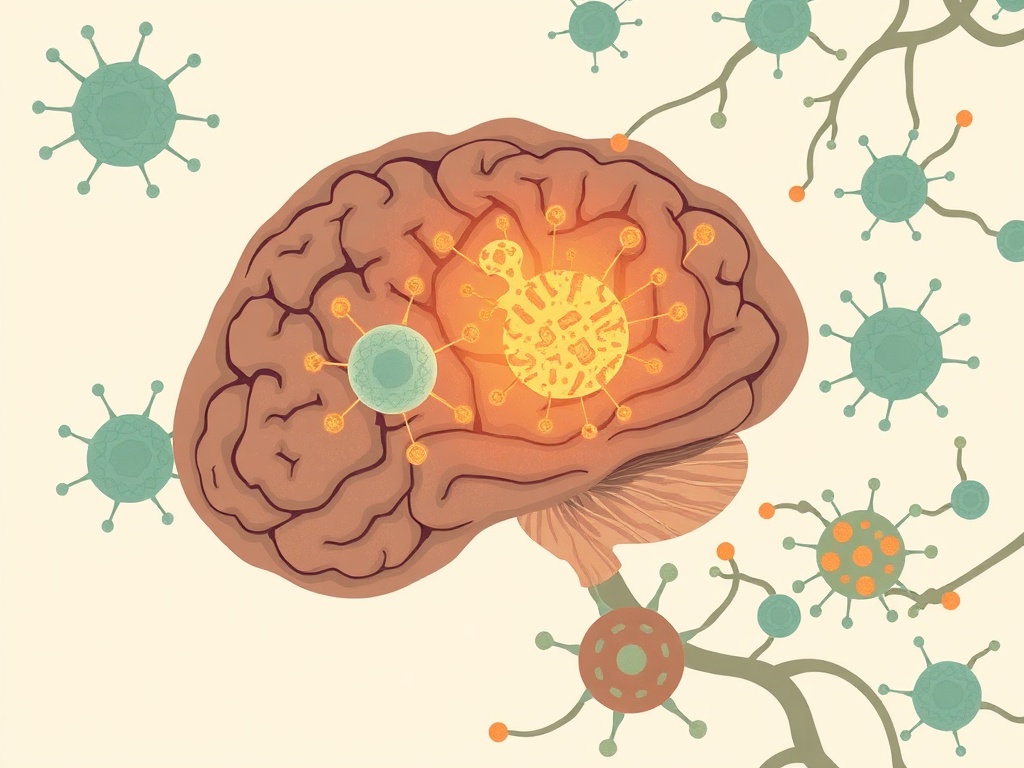
The accumulating burden of senescent cells in the aging brain may represent one of the most actionable upstream targets yet identified for neurodegenerative disease — a realization that has quietly reshaped how researchers think about Alzheimer's, Parkinson's, ALS, and Huntington's over the past decade. Mapping this shift with both quantitative rigor and mechanistic depth is exactly what this synthesis attempts.
Drawing on 269 peer-reviewed publications spanning 2002 to April 2025, the analysis identifies a sharp inflection point around 2018, after which annual output and citation rates climbed steeply — a pattern consistent with the field crossing from niche hypothesis to mainstream research priority. The mechanistic core centers on two converging axes: the p16INK4A/p53-p21CIP1 cell-cycle arrest pathways, which lock damaged neurons and glia into a permanently dysfunctional state, and the senescence-associated secretory phenotype (SASP), a chronic inflammatory secretome that propagates damage to neighboring healthy cells. The review synthesizes how these mechanisms operate across AD, PD, ALS, and HD, and maps the emergence of senotherapeutics — agents designed either to selectively eliminate senescent cells (senolytics) or suppress their SASP output (senomorphics) — as a translational frontier.
For longevity-focused readers, the significance here is structural rather than immediately clinical. This bibliometric synthesis reveals a research field that has consolidated rapidly but remains fragmented across disease silos, with insufficient cross-disease mechanistic integration. The shared senescence architecture across four distinct neurodegenerative conditions is a compelling argument for disease-agnostic therapeutic strategies, yet most trials remain disease-specific. Key limitations include the bibliometric methodology itself — publication mapping reflects research activity, not clinical efficacy — and the relative scarcity of human trial data on senolytics in neurodegeneration specifically. The analysis is confirmatory of a strong trend rather than paradigm-shifting on its own, but it provides the most systematic landscape map of this field to date, making it a valuable orientation tool for researchers and informed observers alike.