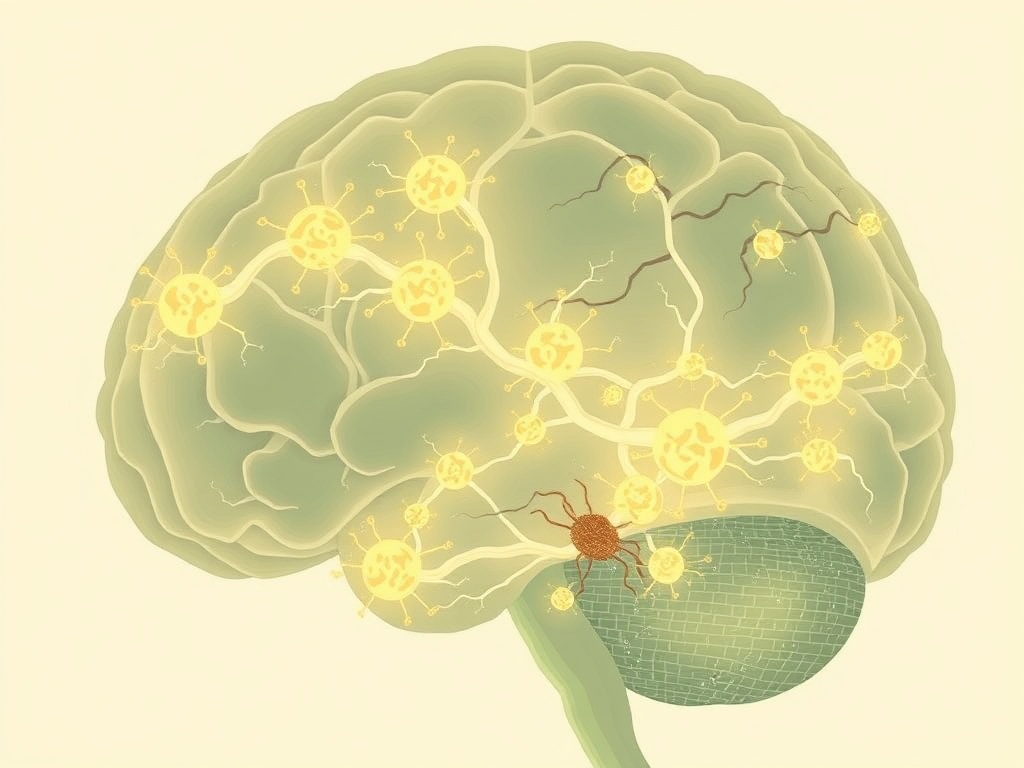
Brain aging research has long struggled to pinpoint exactly which immune cells go rogue, where they congregate, and whether they can be therapeutically targeted. A new spatial mapping study in Nature Aging offers unusually granular answers to all three questions, with implications for how aging-related neurodegeneration might eventually be slowed or reversed.
Using single-cell spatial transcriptomics combined with orthogonal validation approaches, researchers identified a distinct microglial subpopulation characterized by both a senescent and disease-associated transcriptional signature. Critically, these cells do not distribute evenly across aging brain tissue — they preferentially accumulate in white matter regions, a finding with particular relevance given that white matter degradation is a hallmark of cognitive decline in older adults. Importantly, the study demonstrated that this aberrant microglial state is not fixed: senotherapeutic interventions — drugs or compounds designed to selectively eliminate or neutralize senescent cells — were capable of suppressing this population in aged mouse brains.
This work sits at a productive intersection of two rapidly expanding fields: the microglial biology of aging and the senescence-targeting therapeutic space. Most prior senescence research has focused on peripheral tissues such as adipose, liver, and lung; demonstrating a targetable senescent population specifically within central nervous system immune cells meaningfully broadens the scope of potential senotherapy applications. That said, the study is conducted entirely in mice, and the translation of microglial senescence biology to humans is non-trivial — mouse and human microglia differ substantially at the transcriptomic level. The white matter localization finding also warrants independent replication in human postmortem tissue. Overall, this is an important mechanistic step rather than a clinical breakthrough, but it provides a spatially resolved cellular target that drug developers and basic researchers alike can act on with considerably more precision than was previously possible.