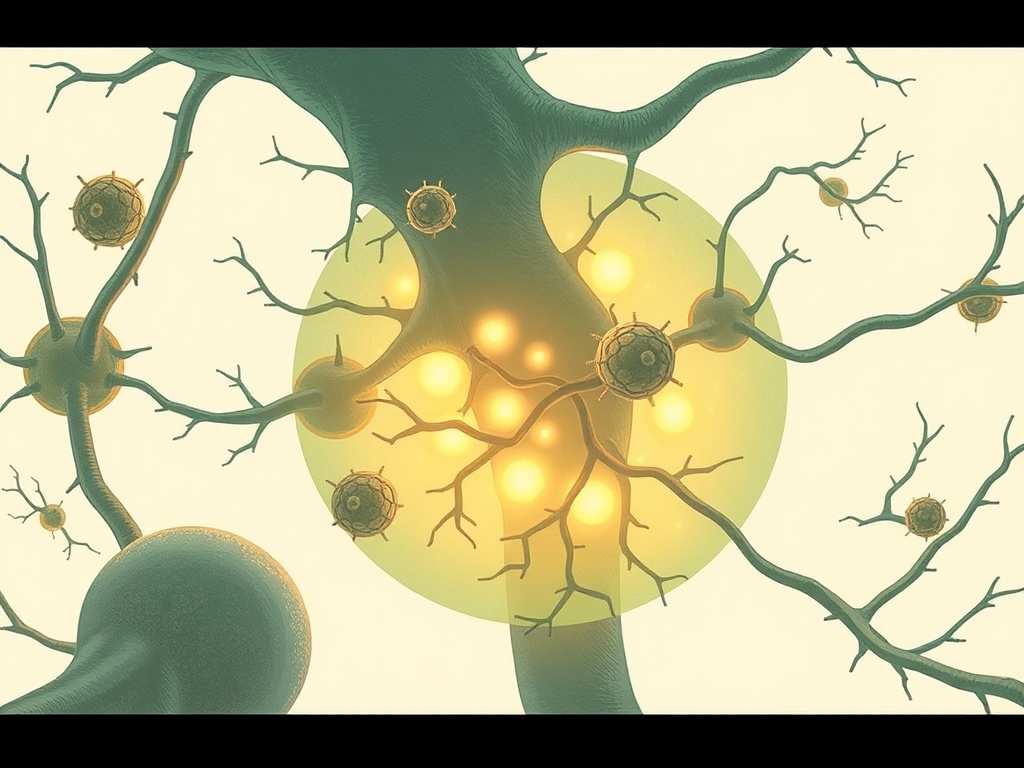
Most discussions of tau protein center on its catastrophic role in Alzheimer's and other tauopathies — the tangles, the neuronal death, the cognitive collapse. But what if tau's pathological behavior is a corruption of a genuinely important physiological function? New mechanistic work published in PNAS reframes tau not merely as a villain in neurodegeneration but as an active participant in maintaining mitochondrial health under normal conditions, which carries significant implications for how therapeutic strategies targeting tau are designed.
The research establishes that tau plays a functional role in regulating mitochondrial dynamics — the continuous cycles of fusion and fission that neurons depend on to match energy output to metabolic demand and to clear damaged mitochondrial components. Rather than being a passive bystander to mitochondrial dysfunction in disease, tau appears to actively influence these processes. When tau becomes hyperphosphorylated or misfolded, as occurs in Alzheimer's disease, this regulatory function is not simply lost — it may be actively disrupted, pushing mitochondrial dynamics toward harmful imbalances. The study characterizes specific mechanistic interactions linking tau's structural state to mitochondrial behavior, though the precise molecular intermediaries warrant further investigation.
This finding sits within a growing literature recognizing that many proteins implicated in neurodegeneration — including alpha-synuclein and TDP-43 — serve legitimate cellular functions before becoming pathological. The insight matters therapeutically: aggressive tau-clearance strategies that eliminate all tau indiscriminately may inadvertently impair normal mitochondrial regulation in neurons. A more nuanced picture emerges where preserving physiological tau activity while preventing pathological aggregation becomes the relevant therapeutic challenge. As a mechanistic study likely conducted at the cellular or animal model level, causal claims in human neurodegeneration remain premature. Still, the reframing of tau as a mitochondrial regulator represents a conceptually important shift — not merely incremental, but potentially redirecting how the field approaches tau-targeting interventions.