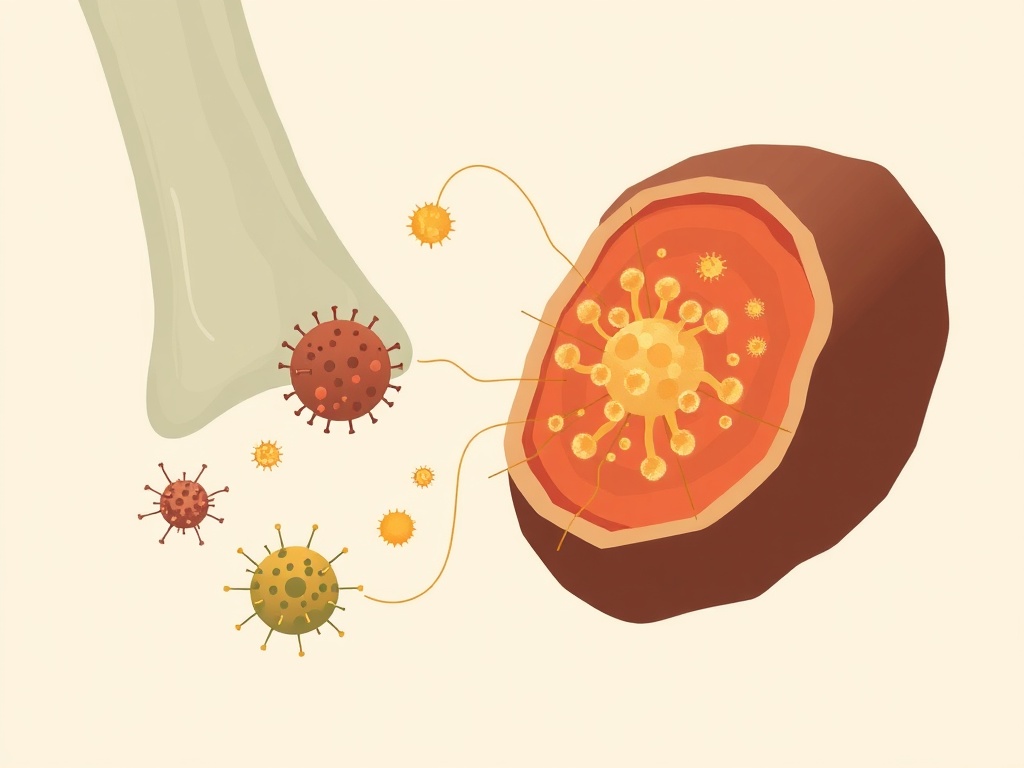
Obesity doesn't just strain the heart and joints — it fundamentally corrupts the immune system's ability to detect and destroy cancer cells. Compounding the problem, this immune dysfunction can persist even after weight loss, leaving formerly obese individuals in an immunologically compromised state. New preclinical evidence suggests that a common dietary supplement ingredient — yeast-derived beta-glucan — may reverse this damage at its cellular root.
Working with diet-induced obese mouse models, researchers demonstrated that oral yeast beta-glucan supplementation triggers a process called trained immunity, a form of innate immune memory that primes immune cells for heightened responsiveness. Critically, the mechanism operates at the level of hematopoietic stem and progenitor cells in the bone marrow — the upstream factories that generate monocytes and macrophages. The result is a sustained wave of metabolically reprogrammed innate immune cells with enhanced anti-tumor capacity. Notably, this effect persisted even after obesity-associated weight loss, suggesting beta-glucan may correct immune programming defects that dietary change alone cannot fix. Researchers identified the mucosal-to-bone-marrow signaling axis as the key pathway through which an orally consumed compound can achieve systemic immune remodeling.
This finding is meaningful for several reasons. Trained immunity has historically required injectable microbial ligands — making this oral route potentially more accessible. The hematopoietic reprogramming angle also adds mechanistic depth to an already substantial body of research linking beta-glucans to immune modulation. However, critical limitations demand caution: this is entirely mouse data, and translating hematopoietic effects from rodent models to humans has a poor historical track record. The specific dose, duration, and beta-glucan purity used in mouse diets rarely map cleanly to human supplementation contexts. Whether the mucosal-bone marrow axis functions equivalently in humans — particularly those with obesity-associated gut barrier disruption — remains untested. This is a genuinely mechanistically novel finding that merits follow-up human trials, but it sits firmly in the hypothesis-generating category for now.