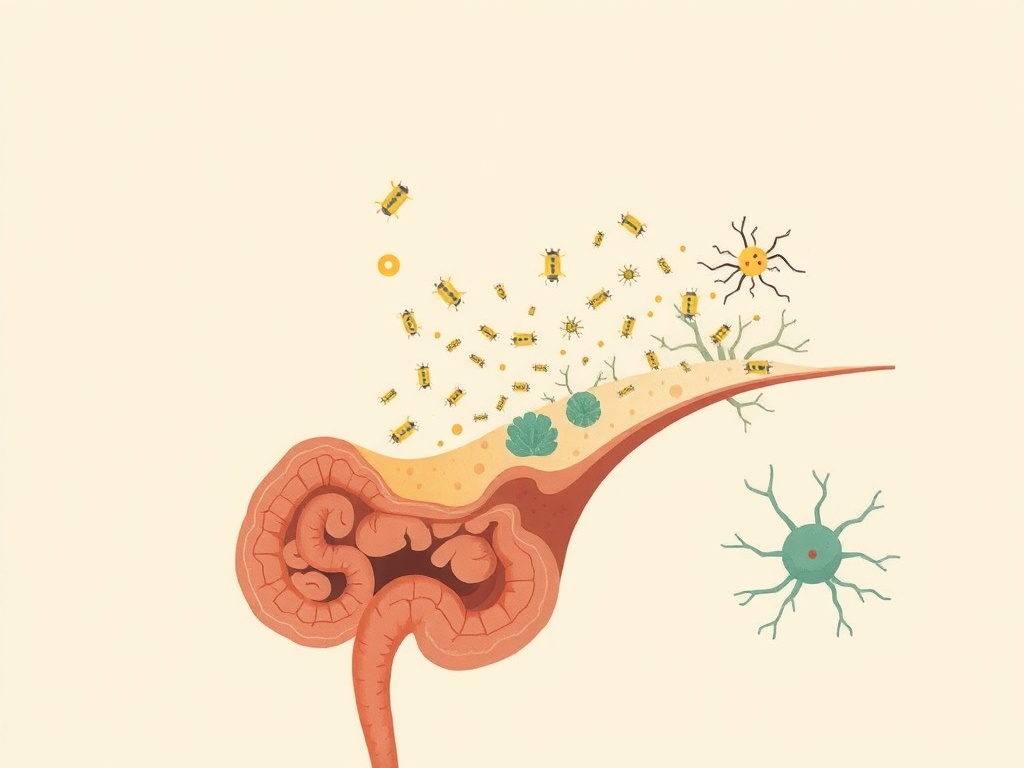
A compound most people have never heard of — produced quietly in the gut by certain bacteria — may be quietly accelerating Alzheimer's pathology years before symptoms appear. That possibility now has multi-layered human and mechanistic support, reshaping how researchers think about the gut-brain axis in dementia risk.
The study centers on imidazole propionate (ImP), a histidine-derived bacterial metabolite previously implicated in type 2 diabetes. Investigators measured plasma ImP in a cognitively unimpaired cohort of 1,196 adults and found that higher circulating ImP was associated with lower preclinical cognitive scores and worse Alzheimer's disease and related dementia (ADRD) biomarker profiles — findings that held up both cross-sectionally and longitudinally. Fecal metagenomic sequencing identified specific bacterial taxa responsible for ImP production and linked them to ADRD phenotypes. A genome-wide integrative analysis uncovered a chromosome 12 locus associated simultaneously with plasma ImP levels and Alzheimer's risk, providing rare genetic evidence for a causal rather than merely correlational relationship. In mouse models, chronic ImP administration worsened AD-like pathology; mechanistically, ImP disrupted brain endothelial barrier integrity and promoted tau hyperphosphorylation in primary neurons — an effect abolished by inhibiting glycogen synthase kinase-3β (GSK-3β), a well-established tau kinase.
What elevates this beyond the typical gut-brain correlational study is the convergence of evidence streams: epidemiological association, longitudinal trajectory, metagenomic mapping, Mendelian-style genetic colocalization, animal model confirmation, and a defined molecular mechanism. GSK-3β is already an active drug target in neurodegeneration research, meaning ImP reduction or GSK-3β inhibition represents a pharmacologically tractable intervention pathway. Key caveats remain: the human data are observational, causality in people is not yet established, and mouse AD models are notoriously imperfect proxies. The cohort, while sizable, was cognitively unimpaired, leaving open how ImP behaves across the full dementia continuum. Still, identifying a modifiable, microbiome-derived molecule with genetic backing and a clear mechanistic handle marks this as one of the more substantive gut-brain-AD findings in recent years.