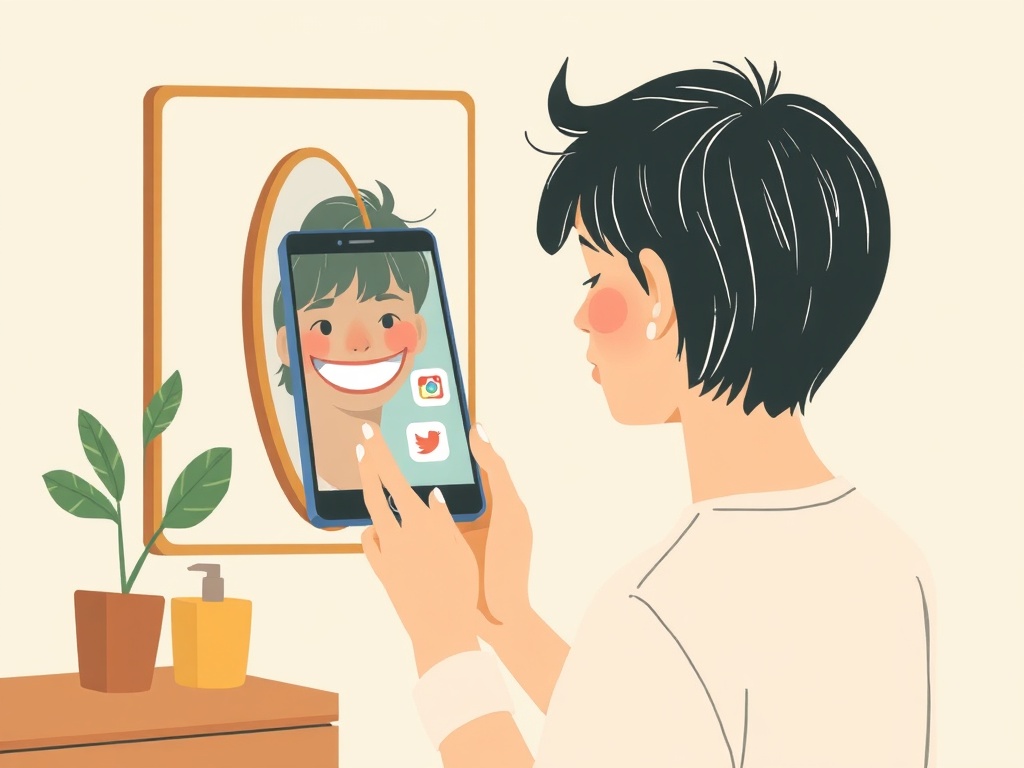
Adolescent mental health is increasingly shaped by forces that operate beneath the radar of traditional health interventions — and social media platforms may be functioning as de facto marketing systems that commodify physical appearance, including teeth. This finding matters because it reframes an overlooked aspect of oral health as a psychological vulnerability driver, with direct implications for parents, clinicians, and digital wellness advocates.
Drawing on 502 parent-child dyads recruited in New Zealand, researchers applied partial least squares structural equation modeling (PLS-SEM) to quantify how dental self-confidence (DSC) relates to social and psychological impact. The analysis revealed that lower DSC correlates meaningfully with greater reported psychological impact, with social impact serving as the dominant mediating pathway — meaning the harm flows primarily through peer perception and social comparison rather than through private self-assessment alone. Critically, active social media use attenuated the otherwise protective relationship between higher DSC and reduced psychological impact, suggesting that even adolescents with reasonably positive dental self-image are not fully insulated from harm when they are frequent platform users.
This study sits at an intersection that health research has underserved: the confluence of oral health self-perception, adolescent identity development, and algorithmically amplified appearance norms. The broader literature on social comparison theory (Festinger, 1954) and body image distress in adolescents is well established, but dental appearance has rarely been isolated as a discrete vulnerability domain. The New Zealand sample offers cultural specificity but limits generalizability across healthcare systems with different orthodontic access and cosmetic dentistry norms. The cross-sectional PLS-SEM design cannot establish causality — heavy social media use and low dental confidence may co-develop rather than one driving the other. Still, the conceptual contribution here is meaningful: treating digital platforms as informal health marketing environments that manufacture appearance-based consumer vulnerability is a framework with significant explanatory power. Clinicians conducting adolescent oral health assessments would do well to incorporate psychosocial screening alongside clinical metrics.