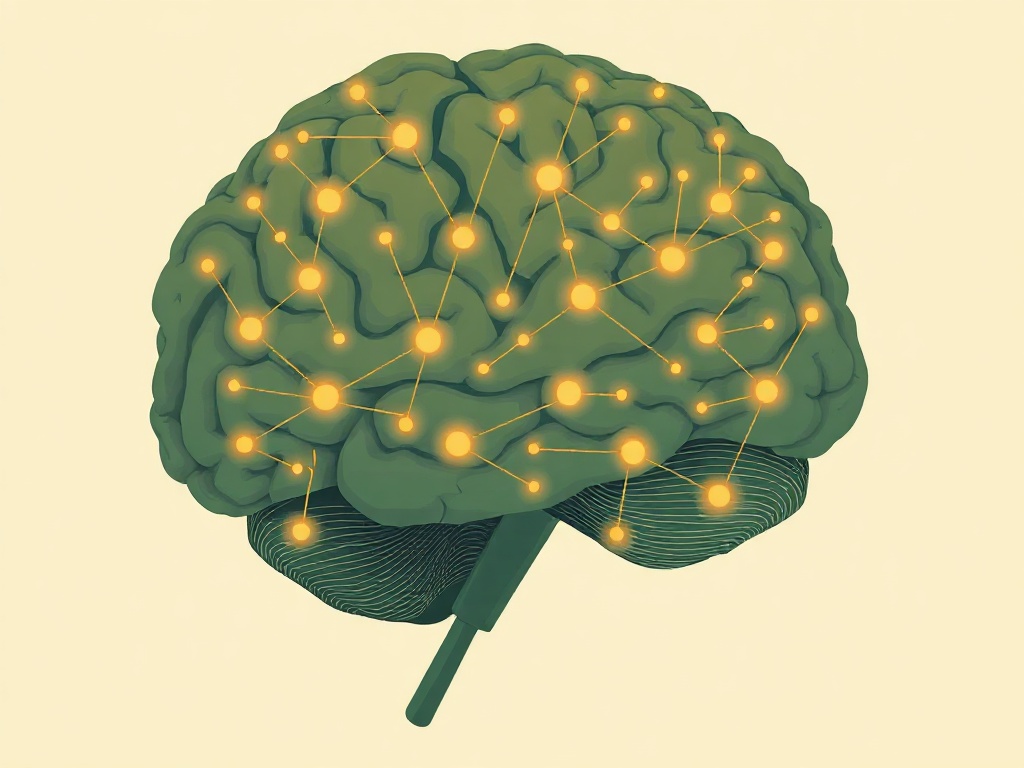
The brain's ability to distinguish the unexpected from the routine is not merely a cognitive luxury — it underlies survival, learning, and the rapid adaptive responses that define healthy neural function. Understanding precisely how this discrimination happens at the circuit level could reshape approaches to conditions where deviance detection breaks down, including schizophrenia, autism spectrum disorder, and age-related cognitive decline.
Published in PNAS, this research identifies a specific cortical mechanism by which local neocortical neuronal ensembles suppress one another through competitive inhibition to flag sensory deviants. Rather than relying on a top-down predictive signal alone, the findings suggest that history-dependent amplification of sensory input is governed at the local circuit level: ensembles tuned to expected stimuli actively inhibit neighboring ensembles encoding novel or surprising inputs, and when that inhibition is violated by deviant input, the suppressed ensemble fires with heightened intensity. The researchers characterized this as a lateral competition among populations of neurons within the neocortex — a process that operates rapidly and without requiring higher-order cognitive resources.
This finding carries real interpretive weight in the context of the mismatch negativity (MMN) literature, a well-studied electrophysiological marker of automatic deviance detection that has been used as a biomarker in psychiatric research for decades. Most mechanistic explanations for MMN have centered on predictive coding frameworks descending from higher cortical areas. This work pushes back toward a more locally driven model, suggesting that inhibitory microcircuits — not just hierarchical prediction error — are doing substantial computational work. For health-conscious readers, the implication is that the integrity of inhibitory interneuron populations in sensory cortex may matter as much as overall neuronal density for maintaining cognitive alertness and perceptual sharpness with age. The study appears to use animal models, so direct human translation requires caution, but the cortical architecture described is highly conserved across mammals. This is an incremental but mechanistically clarifying contribution to systems neuroscience.