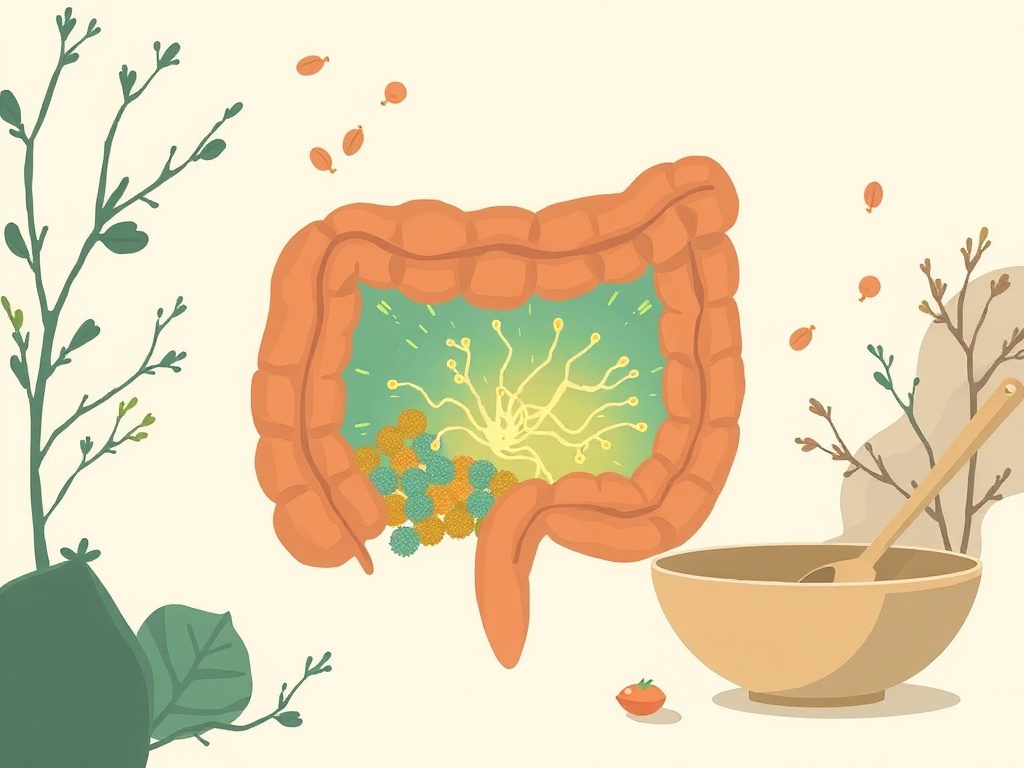
For anyone who has undergone chemotherapy, radiation, or inflammatory bowel disease flares, the gut's ability to regenerate its lining is not an abstract concern — it is survival. A mechanistic pathway now identified in PNAS may explain why fasting, long observed to accelerate gut recovery, actually works at the molecular level, and the answer runs through the microbiome in a surprisingly direct way.
The study traces a three-step chain of causation: short-term fasting selectively expands Akkermansia muciniphila, a mucus-layer bacterium already associated with metabolic health, within the small intestine. That bacterium then elevates circulating levels of propionate, a short-chain fatty acid produced during microbial fermentation. Propionate, in turn, acts as a histone deacetylase inhibitor — meaning it chemically modifies the chromatin packaging around DNA — opening chromatin regions that activate regenerative gene programs in intestinal stem cells. The net effect is faster, more robust epithelial renewal following mucosal injury. The axis is described as microbiome–metabolite–chromatin, linking an environmental input (food absence) to an epigenetic output (gene accessibility) through a living microbial intermediary.
This finding sits at the intersection of three rapidly converging fields: intermittent fasting biology, the Akkermansia literature, and epigenetic regulation of stem cell fate. Propionate's role as an epigenetic modifier is not new — it has been studied in colorectal cancer models — but its deployment here as a fasting-induced regenerative signal in the small intestine represents a meaningful mechanistic advance. Practically, the pathway suggests that pre-fasting before gut-damaging treatments could be a low-cost protective strategy, though the current data are presumably from animal models, which limits immediate clinical translation. Whether oral propionate supplementation or Akkermansia probiotics could replicate the effect without full fasting remains an open and commercially significant question. This is incremental within fasting biology but potentially paradigm-shifting for perioperative and oncology gut-protection protocols.