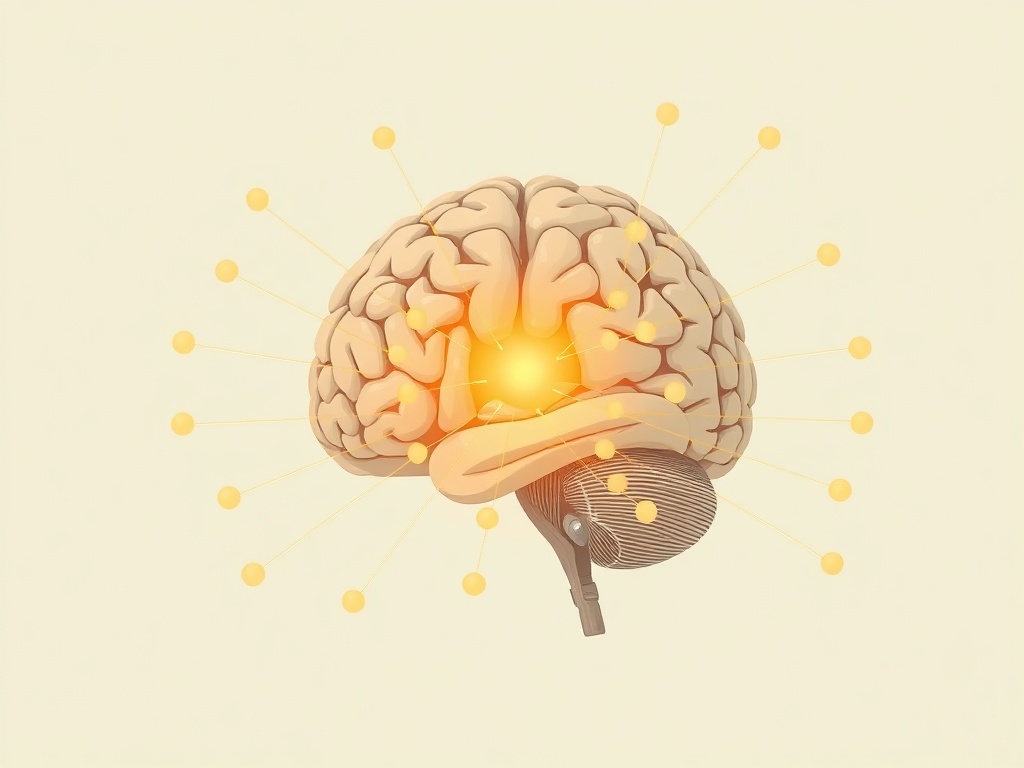
For the millions of epilepsy patients whose seizures resist medication, deep brain stimulation offers a potential lifeline — but only if clinicians can target the right neural structures with precision. The thalamic pulvinar nucleus has emerged as a compelling stimulation target, yet the anatomical roadmap guiding that targeting remains incomplete, largely stitched together from animal research rather than human data.
This review, published in Frontiers in Neuroanatomy, systematically maps cortico-pulvinar connectivity across distinct pulvinar subregions by synthesizing findings from non-human primate (NHP) tract-tracing studies alongside available human diffusion imaging and fMRI data. The pulvinar — the thalamus's largest nucleus — is not a single entity but a collection of functionally distinct subdivisions with unique cortical projection patterns spanning visual, association, and limbic regions. The review identifies how these subregional connectivity profiles differ across NHP species and evaluates how closely human imaging findings align with the invasive anatomical data gathered in primates. Gaps between species are flagged as critical uncertainties for translational application.
The broader significance here is methodological and clinical simultaneously. Deep brain stimulation of the thalamus for epilepsy is already FDA-approved in some forms, but the pulvinar specifically represents a newer, less-characterized frontier. The challenge is that human pulvinar connectivity is almost impossible to confirm with the precision of axonal tracing used in animal models — diffusion MRI can suggest structural pathways but cannot definitively resolve fine subregional boundaries or disambiguate fiber crossings. This review effectively serves as a translational bridge, helping researchers calibrate what animal data can and cannot predict about human circuitry. For clinicians considering pulvinar DBS in refractory epilepsy patients, this kind of anatomical synthesis is not academic — it directly informs electrode placement decisions. The work is confirmatory and consolidating rather than paradigm-shifting, but given how rapidly neurostimulation indications are expanding, a rigorous cross-species anatomical foundation matters considerably.