For clinicians designing rehabilitation protocols, session length is often treated as a logistical constraint rather than a therapeutic variable. New evidence from music therapy suggests that duration may be a biological prerequisite — specifically, that physiological entrainment between patient and therapist requires a minimum exposure window that current short-session models may simply not provide.
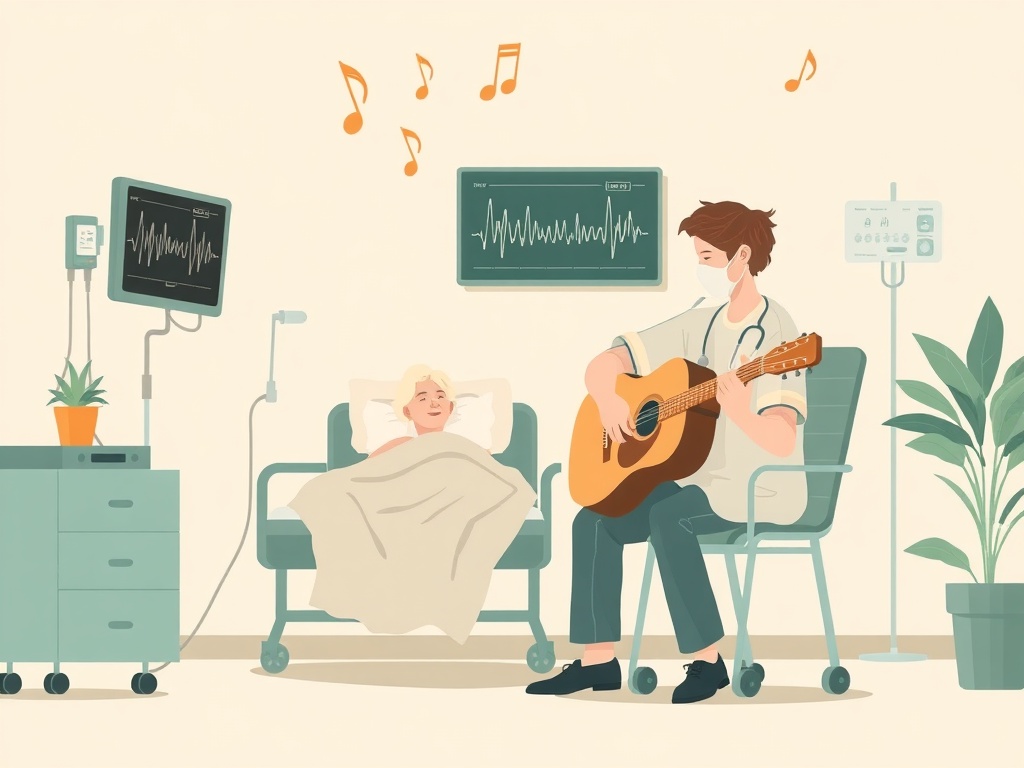
A study published in Frontiers in Psychology examined dyadic heart-rate synchrony between a single music therapist (age 43) and 11 inpatient neurorehabilitation patients (mean age 51) across multiple music therapy sessions. Using continuous HR monitoring and session video coding, researchers tracked synchrony during clinician-selected moments of interest — segments averaging 76 seconds — within sessions lasting roughly 25 minutes. A strong association emerged specifically between sessions reaching the 20-to-25-minute mark and the occurrence of above-chance HR synchrony, suggesting a temporal threshold for physiological co-regulation. Notably, HR synchrony did not correlate significantly with patients' self-reported therapy readiness or with independently measured nonverbal behavioral synchrony.
This finding occupies a genuinely interesting space in the biobehavioral synchrony literature. Prior psychotherapy research has consistently linked physiological synchrony — including HR coupling — to therapist empathy, stronger therapeutic alliance, and positive outcomes, though typically in verbal modalities. The music therapy context adds a layer of complexity: nonverbal, rhythmic, and auditory mechanisms are presumably driving entrainment rather than conversational attunement. The dissociation between HR synchrony and nonverbal synchrony is particularly thought-provoking, implying these are distinct physiological channels rather than redundant signals.
Key limitations deserve emphasis: the single-therapist design severely constrains generalizability, and eleven patients represents a very small convenience sample. Causality cannot be inferred — whether HR synchrony produces therapeutic benefit or merely co-occurs with engaged sessions remains unresolved. Still, for rehabilitation planners, the 20-25 minute threshold warrants replication. If confirmed in larger trials, it would argue against abbreviated music therapy formats common in high-turnover inpatient settings. An incremental but practically actionable finding.