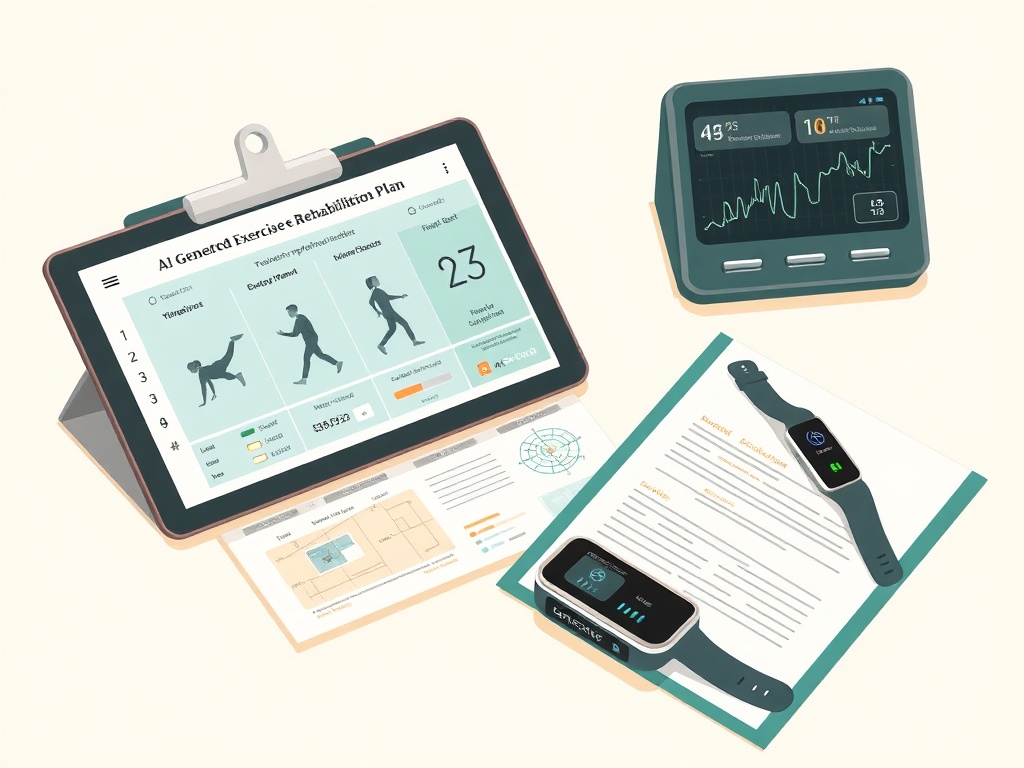
As AI-generated fitness and rehabilitation guidance becomes embedded in everyday health apps and telehealth platforms, the question of who is responsible when that guidance causes harm — and how users can even understand what the AI recommended and why — has never been more urgent. This gap between AI capability and accountability infrastructure is precisely what this governance-focused review attempts to address, with direct implications for the tens of millions of adults already using AI-powered exercise and rehabilitation tools.
The review draws a critical distinction that most AI governance literature glosses over: the difference between general exercise education and individualized, actionable recommendations covering dose, progression, contraindications, and rehabilitation protocols. Once AI guidance crosses into that individualized territory — specifying, for instance, that a post-surgical patient should increase load by 10% this week — it becomes safety-relevant in a qualitatively different way. The authors argue that this transition point is where explainability requirements, human clinician review thresholds, and escalation safeguards must be explicitly designed into digital health services, not retrofitted after deployment. The review synthesizes peer-reviewed literature alongside regulatory and guidance documents to outline implementation-level governance considerations, rather than abstract policy principles.
This is a timely but necessarily preliminary contribution. As a narrative rather than systematic review, it carries the inherent limitation of selective literature coverage and lacks quantitative synthesis of safety outcomes or governance effectiveness data. Its real value lies in forcing a structural question that neither exercise science nor AI ethics communities have adequately answered: at what functional threshold does AI exercise guidance require the same oversight rigor as a clinical prescription? For health-conscious adults using rehabilitation apps or AI coaching platforms, this review underscores that current regulatory frameworks likely lag behind the actual risk profile of these tools. Clinicians integrating AI into telehealth workflows should treat this as a call to formalize their own internal escalation protocols now, rather than waiting for top-down regulatory mandates. Incremental in scope, but raises the right operational questions at the right moment.