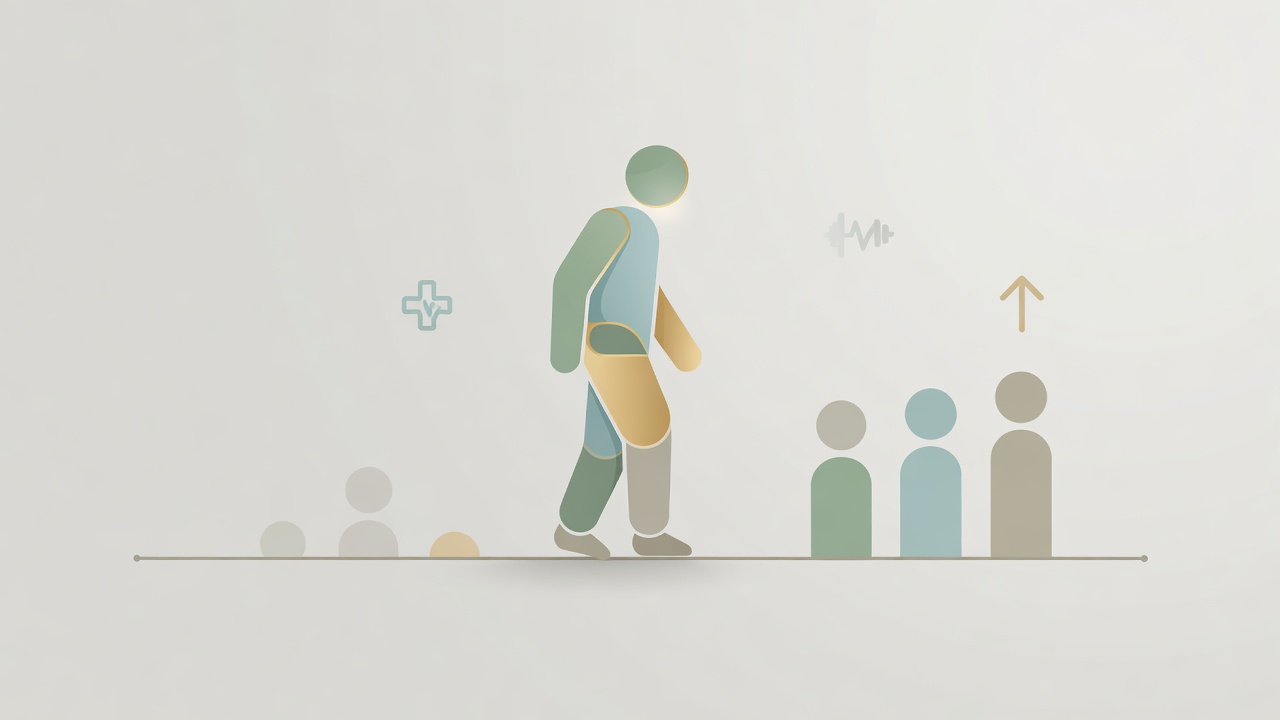
Adults who survived childhood cancer already carry an elevated biological age relative to their chronological years, but a critical mechanism driving that gap has been undercharacterized — until now. Understanding that daily-functioning pain actively accelerates physical frailty progression in this population reframes pain not merely as a quality-of-life issue but as a modifiable risk factor for premature aging.
Drawing on the St. Jude Lifetime Cohort — one of the largest and most rigorously followed groups of childhood cancer survivors in the world — researchers tracked longitudinal frailty trajectories alongside self-reported pain interference. Pain that disrupts daily activities emerged as a significant predictor of both baseline frailty status and the rate at which frailty worsened over time. The association held even after accounting for relevant clinical variables, suggesting pain carries an independent mechanistic or behavioral role in accelerating the frailty phenotype rather than merely co-occurring with it.
This finding sits at an important intersection in survivorship science. The frailty phenotype — characterized by deficits in strength, energy, gait, and resilience — typically appears in the general population after age 65, yet childhood cancer survivors can exhibit it decades earlier, a phenomenon partly attributed to treatment-related toxicity affecting musculoskeletal, endocrine, and cardiovascular systems. What this cohort data adds is a behavioral and symptomatic layer: pain-driven inactivity likely compounds treatment-induced physiological damage through a disuse cascade, accelerating sarcopenia and metabolic dysregulation.
For clinicians and survivors alike, the practical implication is that aggressive, early pain management — pharmacological and non-pharmacological — may function as a genuine anti-frailty intervention, not just comfort care. The study is observational, so causality requires confirmation through randomized trials targeting pain reduction as a frailty endpoint. Nevertheless, given the cohort's depth and follow-up duration, this finding shifts pain screening from optional to arguably essential in adult survivorship protocols. Incremental in isolation, it is potentially practice-changing in context.