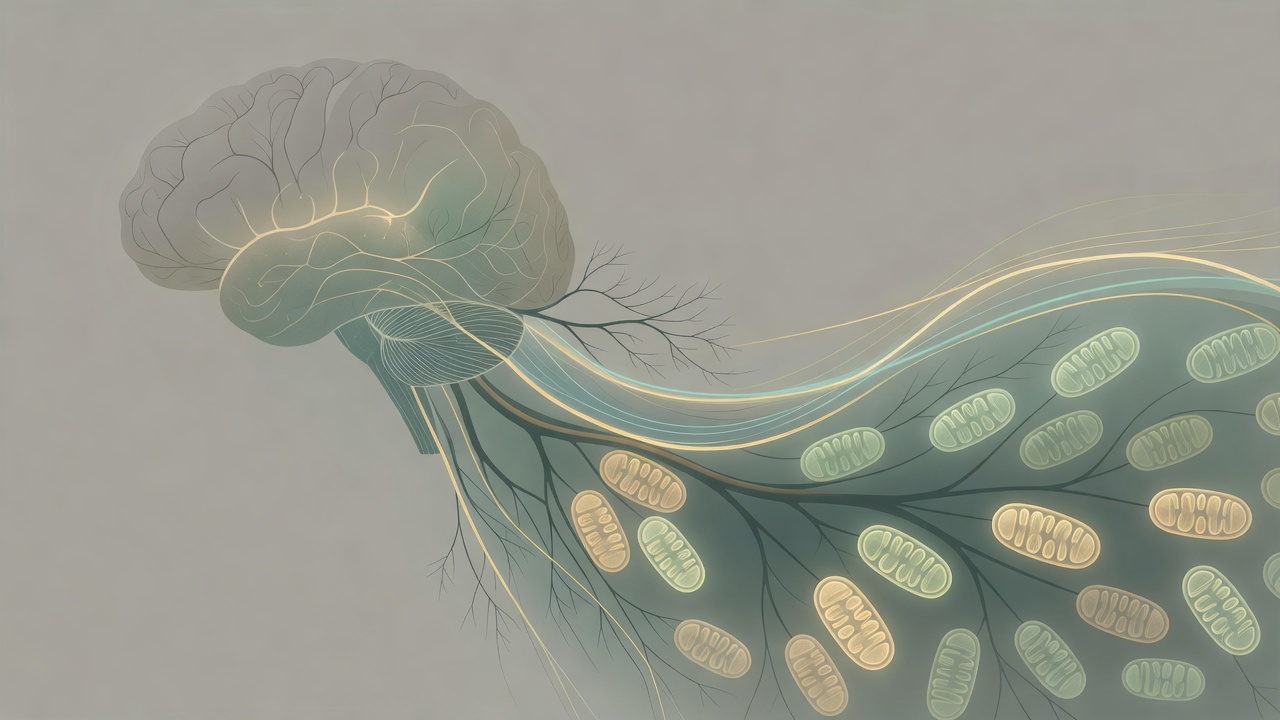
For anyone seeking a non-drug strategy to protect cognitive function with age, understanding exactly how physical activity works at the cellular level transforms exercise from a vague recommendation into a precise intervention. A mechanistic framework now consolidates what was previously scattered evidence into a coherent account of how movement preserves the brain's energy infrastructure.
The review centers on the mitochondrial quality control system — an integrated network governing organelle birth, shape-shifting dynamics, and autophagy-based clearance of damaged units. Normal aging progressively disrupts each of these arms, triggering mitochondrial fragmentation, energy shortfalls, and ultimately synaptic and neuronal decline. Exercise counteracts this deterioration through at least three distinguishable signaling cascades: the AMPK/SIRT1/PGC-1α axis, which drives new mitochondrial biogenesis and metabolic reprogramming; the cAMP/PKA/Drp1 pathway, which regulates the fission-fusion balance that keeps mitochondria structurally sound; and the AMPK/mTOR route, which fine-tunes mitophagy to clear dysfunctional units before they accumulate. Additional evidence points to activity-dependent modulation of mitochondrial gene expression and systemic circulating factors as secondary channels.
What makes this synthesis particularly valuable is its implicit challenge to the single-pathway narrative that has dominated exercise-neuroscience for over a decade. PGC-1α upregulation has long been the headline story; the acknowledgment that dynamic regulation and mitophagic clearance carry independent weight repositions the field. From a practical standpoint, this multi-pathway model suggests that exercise modality, intensity, and duration likely matter differentially for each arm — aerobic training may favor biogenesis signals while resistance or interval protocols may exert stronger effects on fission-fusion dynamics. The review flags this as an open question, which is an honest limitation. As a narrative synthesis rather than a meta-analysis, causal hierarchies between pathways remain inferred rather than quantified. Still, for health-conscious adults, the mechanistic specificity here supports treating structured, varied physical activity as a frontline tool against neurodegeneration — and underscores why intensity prescription deserves far more clinical attention than it currently receives.