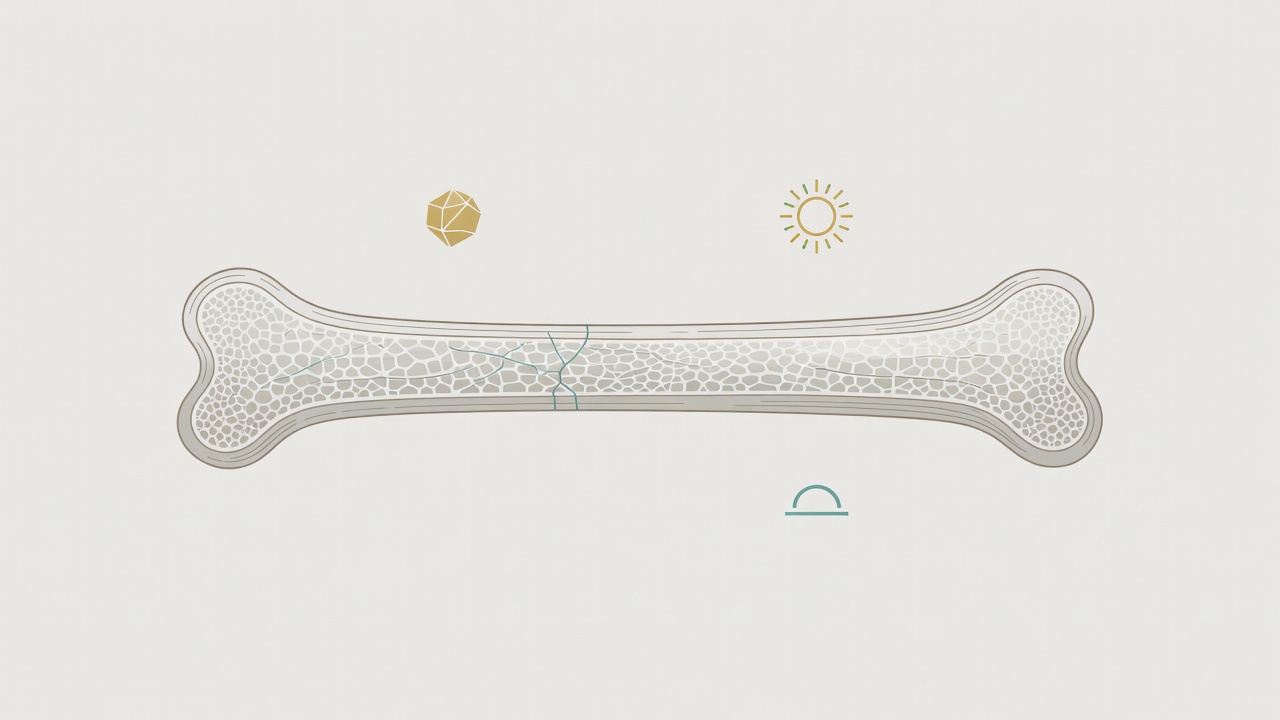
Bone fragility is not exclusively a disease of aging or sedentary living — paradoxically, it is an emerging threat among highly trained athletes whose rigorous routines mask serious skeletal deterioration. This review challenges the assumption that exercise is uniformly protective for bone health, and has direct implications for coaches, sports medicine clinicians, and athletes themselves who monitor long-term physical performance and injury prevention.
The review, published in Seminars in Musculoskeletal Radiology, identifies a convergence of hormonal dysregulation, inflammatory cytokines, and cumulative microdamage as the central drivers of impaired bone remodeling in athletic populations. Critically, it distinguishes between the bone-building benefits of weight-bearing activity and the destructive cascade triggered when training volume outpaces nutritional replenishment and recovery. Low calcium and vitamin D intake are highlighted as specific nutritional deficits that disrupt bone turnover homeostasis. Female athletes presenting with the classic triad — menstrual irregularity, disordered eating, and low bone mineral density — face compounded osteoporosis and stress fracture risk, while hypogonadism is flagged as an underappreciated parallel vulnerability in male athletes. DXA imaging and MRI are positioned as essential diagnostic tools for catching subclinical bone loss before structural failure occurs.
This review reinforces a growing body of evidence that relative energy deficiency in sport (RED-S), the expanded framework beyond the original female athlete triad, affects athletes across sexes and disciplines. Its practical value lies in consolidating screening and intervention strategies — nutritional optimization, hormonal monitoring, and periodized training — into a unified clinical approach. A key limitation is the review's observational and imaging-focused framing, which stops short of causal mechanistic data from randomized trials. Nevertheless, for health-conscious adults engaged in high-volume endurance or strength training, this work is a timely reminder that more exercise is not always better for skeletal integrity without adequate fueling and recovery.