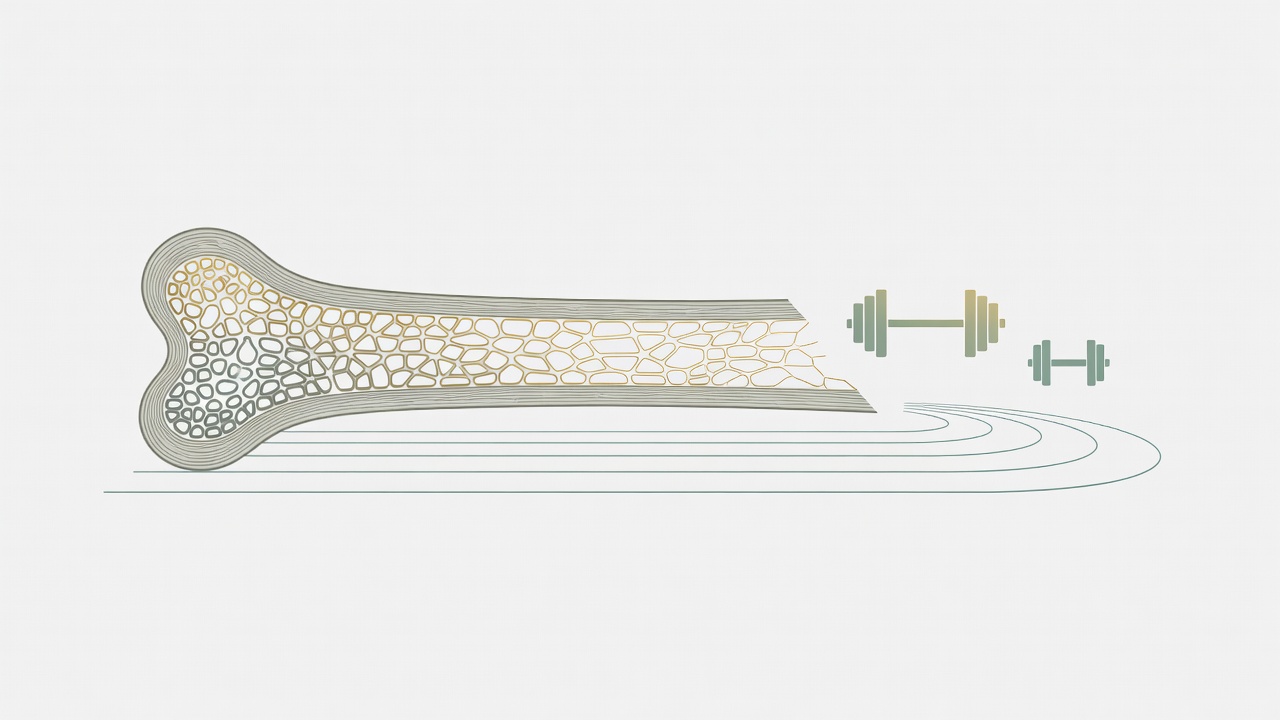
For athletes and fitness-focused adults who assume that heavy training automatically builds stronger bones, emerging clinical evidence presents a sobering counterpoint: beyond a threshold of training load and caloric deficit, the skeleton begins to break down faster than it can rebuild — a process now well-documented in both elite and recreational athletic populations.
The pathophysiology centers on a triad of disruptions: hormonal dysregulation (including estrogen suppression in female athletes and hypogonadism in males), chronic energy availability deficits that deprioritize bone remodeling in favor of essential organ function, and accumulation of microdamage from repetitive mechanical loading without adequate recovery windows. Low calcium and vitamin D intake compound the problem by limiting the raw materials needed for mineralization. The result is measurable reductions in bone mineral density (BMD) detectable via dual-energy X-ray absorptiometry (DEXA), and stress fractures that can derail competitive careers. Female athletes presenting with the classic triad — menstrual irregularities, disordered eating, and reduced BMD — face disproportionate long-term skeletal risk.
This review reinforces what sports medicine has been building toward for two decades: high training volume alone does not confer skeletal resilience. The concept of Relative Energy Deficiency in Sport (RED-S), which expanded beyond the original female athlete triad to include males, now frames this as a systemic metabolic issue rather than a niche concern. What remains a practical gap is implementation — routine BMD screening is still far from standard in non-elite athletic programs, and many athletes are diagnosed only after a fracture occurs. For health-conscious adults integrating intense training into their lives, this is a clear signal that nutritional sufficiency and recovery cycles are not optional variables but essential bone-protective mechanisms. The evidence here is well-replicated and clinically actionable, making it confirmatory rather than paradigm-shifting, but no less important for that reason.