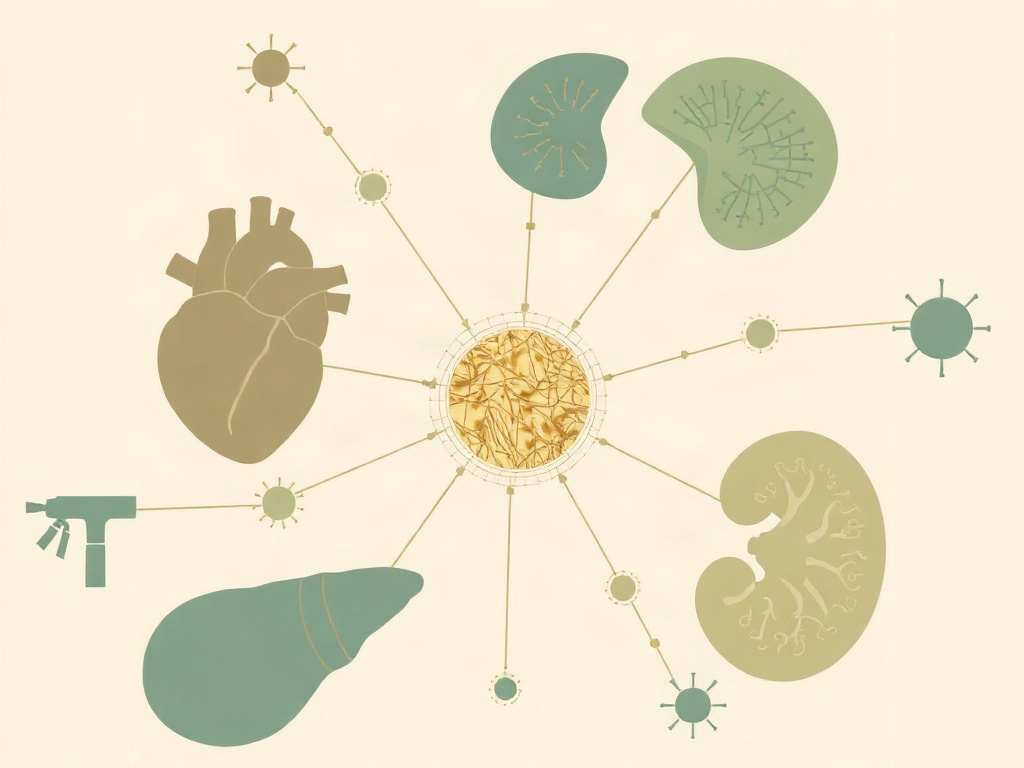
Cellular senescence emerges as the central mechanism driving diabetic kidney disease progression in 30-40% of diabetic patients, with 25% ultimately requiring dialysis or transplant. The research identifies distinct senescence patterns across three critical kidney cell types—podocytes, endothelial cells, and mesangial cells—each contributing uniquely to kidney filtration breakdown through complement activation, mitochondrial dysfunction, and DNA damage responses. This cellular heterogeneity represents a paradigm shift from viewing diabetic kidney disease as a uniform metabolic disorder to understanding it as a complex aging process affecting different cell populations distinctly. The implications are profound for precision medicine approaches to diabetes management. Rather than one-size-fits-all treatments, interventions could target specific senescent cell populations based on individual disease patterns. The identification of senescence biomarkers and epigenetic clocks offers diagnostic tools for earlier intervention, potentially preventing the inexorable progression to dialysis that currently affects millions worldwide. This mechanistic understanding positions anti-senescence therapies—already showing promise in longevity research—as potential game-changers for diabetic complications, transforming a leading cause of kidney failure into a preventable condition.
Glomerular Cell Senescence Drives 30-40% Diabetic Kidney Disease Progression
Primary reference: Cellular and molecular life sciences : CMLS · View source ↗
Informational, non-clinical synthesis informed by published research. Not a clinical guideline or medical advice. May contain errors or editorial interpretation. Consult the original source and your physician.