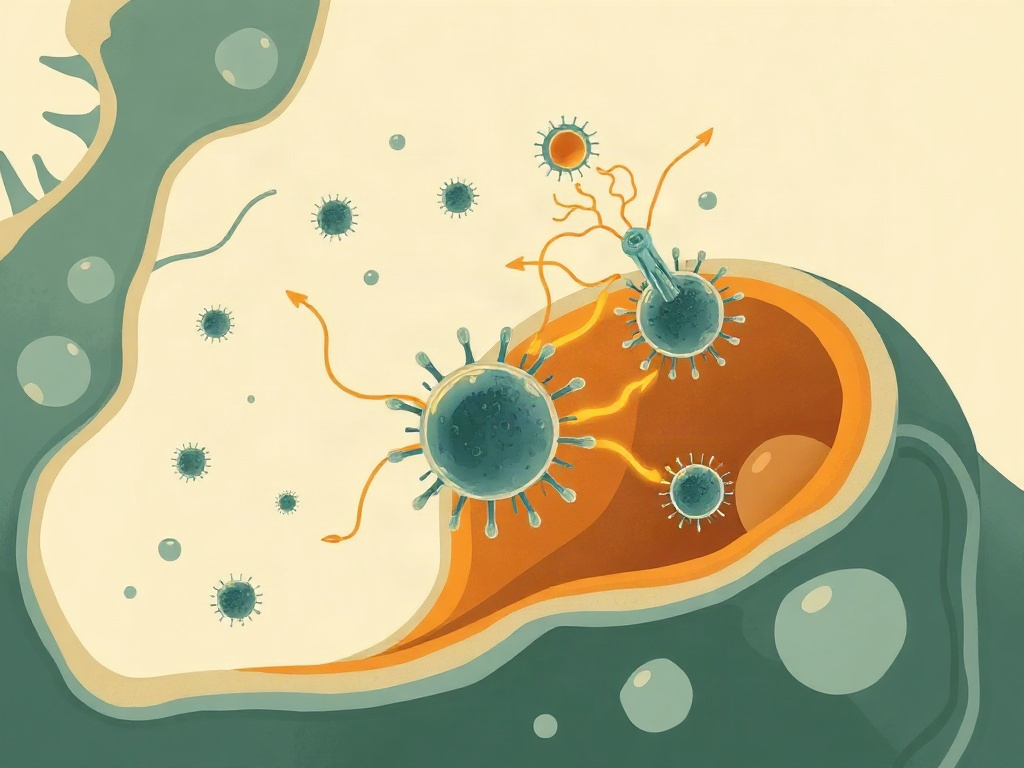
The discovery that cellular senescence serves dual opposing roles in mammary tissue challenges fundamental assumptions about aging mechanisms and cancer prevention strategies. This paradox has profound implications for women's health, particularly regarding postpartum breast cancer risk and therapeutic interventions targeting senescent cells.
Mouse studies reveal that p16Ink4a-dependent senescence in alveolar luminal cells orchestrates the complex tissue remodeling required during postpartum mammary gland involution. When researchers eliminated these senescent cells, normal tissue restructuring failed and involution was significantly delayed, establishing their physiological necessity. However, in cancer models where oncogenic activation coincided with involution, removing the same senescent cells extended tumor latency periods. The mechanistic driver appears to be the senescence-associated secretory phenotype (SASP), which enhances tumor cell plasticity and promotes metastatic potential.
This research fundamentally reframes our understanding of cellular senescence in tissue biology. Rather than viewing senescent cells as uniformly detrimental accumulations that drive aging, the findings demonstrate context-dependent functionality where the same cellular mechanism essential for healthy tissue repair becomes co-opted by malignant processes. The timing relationship between physiological senescence and oncogenic events emerges as critical, suggesting that therapeutic senolytic interventions require precise temporal considerations. For the growing field of anti-aging medicine targeting senescent cells, these results mandate careful evaluation of treatment windows, particularly in reproductive-age women. The work establishes senescence as a unifying biological bridge between necessary tissue repair processes and cancer initiation, fundamentally shifting how we conceptualize the relationship between aging mechanisms and disease risk.